
Kayaking is booming, and more paddlers are demanding smarter, safer ways to transport their boats. The right kayak holder for roof rack does more than just carry your gear, it transforms your entire adventure by making loading, unloading, and travel stress-free.
In this guide, you will discover 9 essential options for 2026, each carefully reviewed for features, pricing, and user needs. Whether you crave the latest tech or a simple solution, you will find a kayak holder for roof rack that fits your journey. Get ready to experience hassle-free transport and make every paddling trip smoother than ever.
Key Considerations When Choosing a Kayak Holder for Roof Racks
Selecting the best kayak holder for roof rack setups is crucial for safe, convenient paddling adventures. With so many options on the market, focusing on compatibility, security, ease of use, and versatility can help you make a confident choice. Let’s break down these essential factors to guide your decision.
Compatibility With Your Vehicle and Kayak
Ensuring your kayak holder for roof rack fits both your vehicle and watercraft is the foundation of a hassle-free transport experience. Different vehicles require specific roof rack styles, such as factory crossbars or aftermarket solutions. Choosing a holder that matches your rack type, like the Roof Rack Omega Bars Medium, prevents costly returns and frustration.
Pay close attention to kayak size and weight limits. Some holders are designed for lighter kayaks, while others accommodate heavier, wider models. Fit issues often arise when holders are paired with incompatible racks or oversized kayaks, but adjustable cradles or stackers can solve these challenges.
Studies show that 60% of kayak holder for roof rack returns stem from compatibility errors. Double-checking fit guides and manufacturer specs can save you time and money.
Security and Protection Features
Security is a top priority when selecting a kayak holder for roof rack systems. Look for models with anti-theft locks, robust tie-downs, and ample padding to safeguard your kayak during transport. Premium holders often feature weatherproof materials and UV-resistant coatings, protecting both your gear and vehicle from the elements.
The design also impacts hull protection. For example, rubberized cradles offer superior cushioning compared to bare metal alternatives, reducing the risk of scratches and dents. Investing in these features ensures your kayak remains safe and in top condition on every trip.
A well-designed kayak holder for roof rack not only deters theft but also shields your investment from daily wear and tear.
Ease of Installation and Use
A user-friendly kayak holder for roof rack can transform your loading routine. Tool-free installation is highly preferred, with 80% of users favoring systems that snap on or off without extra hardware. This feature is especially valuable for paddlers who remove their racks between trips or need a quick setup at the launch site.
Foldable and low-profile designs make daily driving smoother, allowing you to leave the holder on your vehicle without added noise or drag. User feedback highlights the importance of straightforward instructions and short installation times, as many paddlers value convenience above all.
Prioritizing ease of use in a kayak holder for roof rack can save you time and effort, making every adventure more enjoyable.
Storage and Versatility
Modern kayak holder for roof rack designs go beyond single-sport use. Stackable and foldable options make seasonal storage simple, whether you keep your holder indoors or outdoors. Some models are built for multi-sport adaptability, accommodating SUPs, canoes, or even cargo boxes.
Families and group paddlers benefit from dual-purpose holders that can carry multiple kayaks or gear types at once. For those with limited storage space, compact and foldable holders are a practical solution, keeping your garage or trunk clutter-free.
Choosing a versatile kayak holder for roof rack ensures long-term value, adapting to your evolving paddling needs.
9 Essential Kayak Holder for Roof Rack Picks for 2026
Choosing the right kayak holder for roof rack setups can make your paddling adventures in 2026 safer and more enjoyable. Below, we review nine essential options, detailing their features, benefits, target users, and key pros and cons. Whether you paddle solo, with family, or need innovative tech for effortless loading, there is a kayak holder for roof rack that suits your needs.
Yakima JayLow Kayak Carrier
The Yakima JayLow is a versatile kayak holder for roof rack solutions, designed for easy adaptation to both solo and group paddlers. With a price point around $239, it offers an adjustable J-cradle that folds flat when not in use, saving space and reducing wind drag.
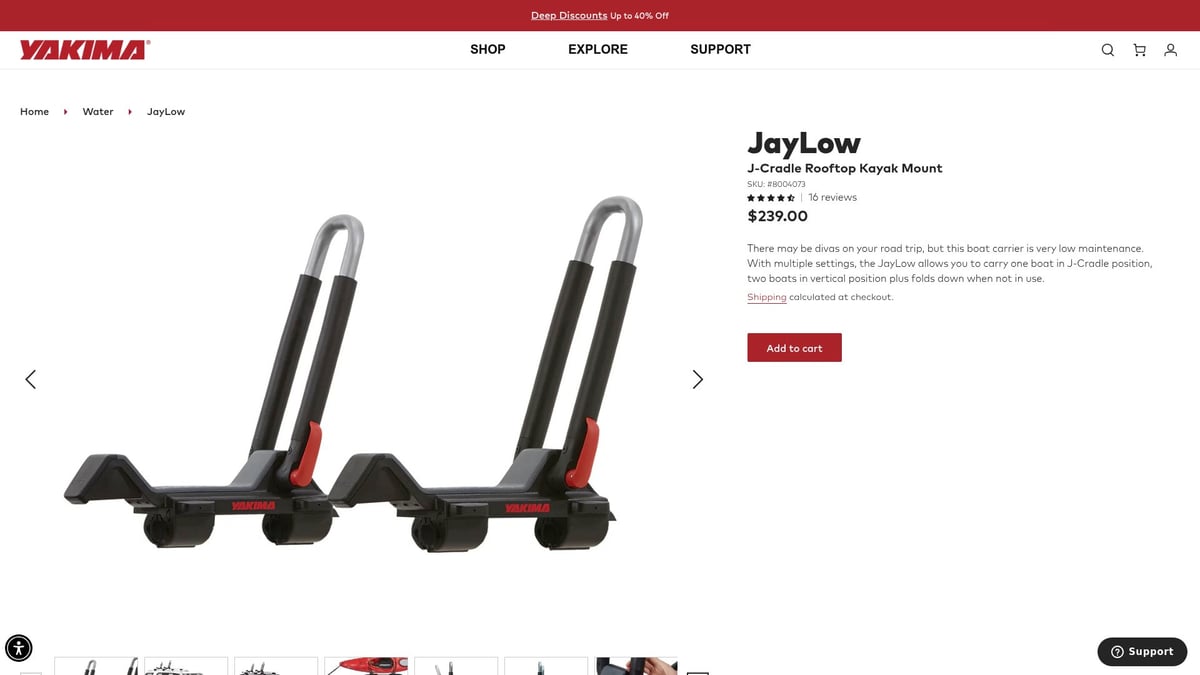 Key features include tool-free installation and compatibility with most crossbars, making it a user-friendly kayak holder for roof rack systems on SUVs and sedans. The design can transport one kayak in J-style or two in a stacked configuration.
Pros:
- Simple tool-free mounting
- Durable and weather-resistant
- Space-saving fold-flat option
Cons:
- Included straps may be short for wider kayaks
- Not ideal for extremely heavy boats
For families or solo paddlers seeking a reliable kayak holder for roof rack use, the JayLow balances convenience and security.
Thule Hullavator Pro 898
If lifting a heavy kayak is a challenge, the Thule Hullavator Pro 898 stands out as a premium kayak holder for roof rack setups. Priced at about $899, it features gas-assist arms that lower the carrier and kayak to waist height for easy loading.
This kayak holder for roof rack systems supports up to 40 lbs of lift assist, making it ideal for older paddlers or those with heavier kayaks. Its aluminum arms are corrosion-resistant, and the system is compatible with most wide crossbars.
Pros:
- Easiest solo loading, reducing strain
- Robust and lockable for security
- High-quality materials
Cons:
- Higher cost
- Heavy and requires wider crossbars
For those prioritizing ease of use and premium build, this kayak holder for roof rack transport is a top-tier choice.
Malone Downloader Folding J-Style Carrier
The Malone Downloader is a budget-friendly kayak holder for roof rack applications, priced at about $179. It features a fold-down J-cradle frame for improved aerodynamics and easier garage entry.
Universal fit mounting hardware means this kayak holder for roof rack systems works with most factory and aftermarket crossbars. The built-in boarding ramp streamlines loading, and included straps add value for first-time buyers.
Pros:
- Lightweight and affordable
- Simple to install and fold
- Good fit for compact vehicles
Cons:
- Padding may degrade over time
- Not suitable for extra-heavy kayaks
This kayak holder for roof rack use is perfect for budget-conscious paddlers and those with smaller cars.
Rhino-Rack Nautic 570 Series
For solo adventurers, the Rhino-Rack Nautic 570 Series offers a unique rear-loading kayak holder for roof rack convenience. At around $210, its pivoting cradle design gently supports hulls, while UV-protected materials boost longevity.
 The rear-loading feature means you can slide your kayak up from behind the vehicle, reducing lifting effort. This kayak holder for roof rack systems fits most bar types and maintains a low profile when not in use.
Pros:
- Quick, solo-friendly loading
- Durable construction
- Minimal wind resistance
Cons:
- Some fit issues with very wide kayaks
- May require extra padding for ultra-sensitive hulls
Touring kayak owners seeking a gentle and efficient kayak holder for roof rack setups will appreciate this model’s thoughtful design.
INNO INA445 Locking Kayak Carrier
Urban paddlers often prioritize security, making the INNO INA445 an excellent kayak holder for roof rack systems. Priced around $249, it features integrated locks and soft cradles for hull protection.
 This kayak holder for roof rack setups uses universal mounting hardware for broad compatibility. Tool-free installation means you can easily move or remove it, while the built-in locks deter theft in city environments.
Pros:
- Enhanced theft resistance
- Easy to mount and adjust
- Gentle on kayak surfaces
Cons:
- Locks may freeze in extreme cold
- Slightly heavier than basic carriers
For those transporting their kayak in urban settings, this kayak holder for roof rack use provides peace of mind and easy handling.
TMS J-Bar Rack HD Kayak Carrier
The TMS J-Bar Rack HD is a straightforward kayak holder for roof rack needs, especially for those on a tight budget. At only $65 per pair, it offers heavy-duty steel construction with foam padding.
This kayak holder for roof rack configurations fits most vehicles thanks to its universal design. The simple, effective shape makes it suitable for occasional paddlers, students, or renters.
Pros:
- Very affordable
- Sturdy and reliable
- Fast, easy installation
Cons:
- Lacks locking features
- Basic padding may wear quickly
- Minimal extra features
If you need an economical kayak holder for roof rack transport, the TMS J-Bar is a solid, no-frills option.
Kuat Class 2 Kayak Carrier
Design-conscious paddlers will appreciate the Kuat Class 2 kayak holder for roof rack systems, priced at about $229. It features quick-release hardware, folding arms, and protective rubber padding.
 This kayak holder for roof rack setups is sleek and compact, supporting easy adjustability and a stylish look. Its compatibility is best with certain rack types, so check your vehicle’s setup before purchase.
Pros:
- Modern, attractive design
- Compact folding for storage
- Excellent hull support
Cons:
- Limited to specific racks
- Higher price for added features
Frequent users seeking a premium, visually appealing kayak holder for roof rack use will find the Kuat Class 2 a worthy investment.
Sea to Summit Traveller Soft Rack
For those without permanent racks, the Sea to Summit Traveller Soft Rack is a flexible kayak holder for roof rack alternatives. Priced at $99, it uses inflatable or foam pads to create a temporary mounting solution on bare vehicle roofs.
This kayak holder for roof rack-free vehicles is ultra-portable and requires no tools. It is perfect for renters, travelers, or those who need a transport solution without committing to a full rack system.
Pros:
- Lightweight and compact
- No crossbars needed
- Quick, tool-free setup
Cons:
- Less secure at highway speeds
- Not ideal for long-distance trips
If you need a temporary kayak holder for roof rack-free use, this portable system is an efficient choice.
Yakima BigStack Kayak Stacker
The Yakima BigStack is the ultimate kayak holder for roof rack systems when transporting multiple kayaks. At $199, it features vertical stacker posts that fold down when not in use, fitting up to four kayaks.
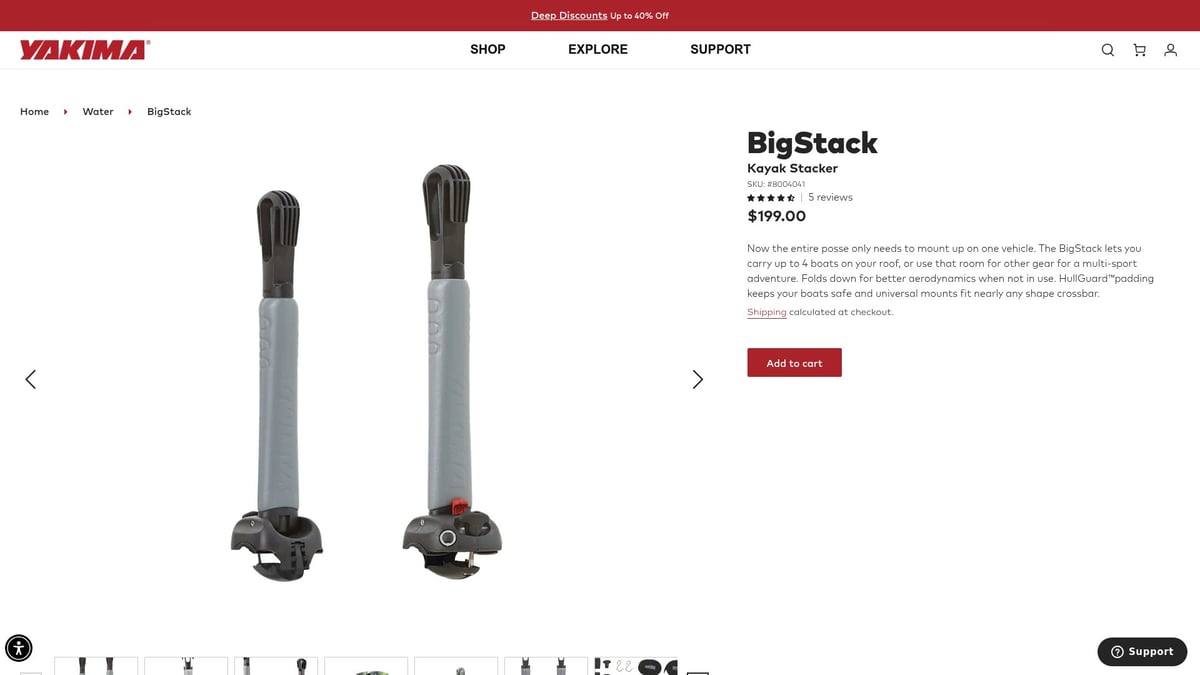 This kayak holder for roof rack setups is ideal for clubs, families, or group trips. The design maximizes roof space, though it requires careful strapping and may increase wind noise.
Pros:
- Carries multiple kayaks
- Folds down for convenience
- Sturdy and reliable
Cons:
- Exposed kayaks to wind and elements
- Requires precise strapping for safety
To ensure optimal safety, review Kayak Roof Rack Safety Tips for best practices on securing your kayaks during transport.
This kayak holder for roof rack solution is perfect for group paddlers who value capacity and flexibility.
How to Safely Load and Secure Your Kayak
Transporting your kayak safely begins with the right technique and tools. A well-chosen kayak holder for roof rack not only supports your kayak but also streamlines the loading and securing process. Whether you paddle solo or in a group, following best practices ensures your journey starts and ends without a hitch.
Step-by-Step Loading Process
Properly loading your kayak onto your vehicle is crucial for both safety and convenience. Start by positioning your kayak holder for roof rack at the correct width for your kayak. If your system has load-assist features, such as gas-assist arms or ramps, use them to minimize lifting strain.
Follow these steps for safe loading:
- Stand with your feet shoulder-width apart, keeping your back straight.
- Lift the kayak using your legs, not your back, to avoid injury.
- If possible, ask a partner to help lift and balance the kayak.
- Align the kayak with the holder, and gently settle it into the cradles.
For solo paddlers, products with integrated load-assist mechanisms, like the Hullavator Pro, can make this process much easier. Always double-check that your kayak sits evenly in the kayak holder for roof rack before moving on to the next step.
Strapping and Securing Best Practices
Securing your kayak correctly is essential to prevent accidents on the road. Begin by threading the straps through the kayak holder for roof rack, ensuring they are centered over the kayak. Tighten the straps until the kayak is snug, but avoid overtightening, which can deform the hull.
Key best practices include:
- Use cam straps instead of ratchet straps for better control.
- Attach bow and stern tie-downs to the front and rear of your vehicle.
- Check that straps are free of twists and knots.
For a detailed, illustrated guide on strapping, refer to How to Tie Down a Kayak. Remember, statistics show that 70% of kayak travel incidents are due to improper strapping, so attention to detail here is critical for every kayak holder for roof rack setup.
Safety Checks Before Hitting the Road
Before you drive off, take a moment to perform thorough safety checks. Inspect your kayak holder for roof rack and all securing straps for signs of wear, tear, or damage. Make sure every mount and buckle is tight.
Use this checklist:
- Tug on the kayak to ensure it does not shift.
- Confirm that bow and stern lines are secure.
- Look for frayed straps or loose hardware that could fail during transit.
A missed check can lead to kayak loss or damage. In one real-world case, a paddler lost their kayak on the highway due to a loose strap. Take these few extra minutes to ensure your kayak holder for roof rack is up to the task.
Tips for Long-Distance and Highway Travel
When traveling long distances or at highway speeds, wind resistance and road vibrations can impact both your kayak and the kayak holder for roof rack. Reduce your speed to minimize wind force and improve fuel efficiency, which can drop by up to 15% with a roof-mounted kayak.
Consider these tips:
- Make periodic stops to recheck straps and mounts.
- Use weatherproof covers to protect your kayak from debris and sun.
- Position the kayak centrally to balance weight and reduce drag.
By following these precautions, you help ensure your kayak holder for roof rack delivers safe, worry-free transport—no matter how far your adventure takes you.
Maintenance, Storage, and Longevity of Kayak Holders
Proper maintenance is crucial for maximizing the lifespan and performance of your kayak holder for roof rack. Regular care not only protects your investment, but also ensures safe, reliable transport for every adventure.
Cleaning and Material Care
Salt, dirt, and road debris can quickly degrade a kayak holder for roof rack if left unchecked. After each trip, rinse all parts with fresh water, especially if you’ve been near saltwater. Use a mild soap and a soft brush to remove stubborn grime. Pay special attention to padding, straps, and moving joints.
If your setup uses specialized roof bars, such as the Roofbar Tiger Bars for Vehicles, inspect connection points for trapped debris. Keeping these areas clean reduces the risk of corrosion and premature wear.
Seasonal Storage and UV Protection
When storing your kayak holder for roof rack during the off-season, choose a dry, shaded area. Direct sunlight can cause fading and brittle plastics, so UV protection is essential. For outdoor storage, consider a weatherproof cover or store the holder inside a shed or garage.
In winter, avoid leaving the holder on your car if snow and ice are expected. Moisture can cause metal parts to rust and damage locking mechanisms. A quick wipe-down after exposure to rain or snow helps prevent buildup.
Inspection and Lubrication
Inspect your kayak holder for roof rack regularly for signs of rust, cracks, or UV damage. Check all bolts, straps, and locks for tightness and integrity. If your model has folding arms or adjustable parts, lubricate hinges and joints with a silicone-based spray every few months.
Pay attention to any areas where paint or coating has worn away, as these are prone to corrosion. Replace any worn padding or frayed straps promptly to maintain hull protection.
Smart Storage and Longevity Tips
Proper storage can extend the life of your kayak holder for roof rack by years. Disassemble and store small parts separately to avoid misplacement. Use wall hooks or shelving in your garage to keep holders off the ground and away from moisture.
Owners who follow a simple maintenance schedule often enjoy 3+ years of reliable service. In fact, 40% of premature failures are linked to neglect or improper storage. For more advice on compatible roof rack systems and secure storage, consult the Canoe and Kayak Car Rack Guide.
Frequently Asked Questions About Kayak Holders for Roof Racks
Choosing the right kayak holder for roof rack setups often brings up a host of questions. Whether you are new to paddling or upgrading your gear, these answers address the most common concerns and help ensure a smooth transport experience.
What kayak holder for roof rack fits my car model?
Compatibility depends on your vehicle's roof type and the kayak's size. Some holders are designed for raised rails or crossbars, while others fit bare roofs. For example, the Raised Rails Roof Bar Sherman is a popular base compatible with many kayak holders. Always check manufacturer fit guides to prevent returns due to mismatched systems.
Can I use these holders for SUPs or canoes?
Many kayak holder for roof rack systems are versatile enough to carry stand-up paddleboards (SUPs) or canoes. Look for adjustable cradles or stacker-style racks with flexible straps. However, always verify weight and width limits, since wider boards or canoes may require different padding or tie-downs for stability.
How do I prevent theft of my kayak and holder?
Security is crucial when transporting gear. Select a kayak holder for roof rack with integrated locks and secure straps. For best practices on strapping and anti-theft measures, review the Kayak Transport Safety Guidelines. Removing loose accessories and using locking cables adds another layer of protection.
What’s the weight limit for most roof rack systems?
Most factory and aftermarket roof racks support between 75 and 165 pounds, including the kayak holder for roof rack itself. Always consult your vehicle and rack manuals to avoid overloading, which can compromise safety and performance.
Are aftermarket racks better than factory racks?
Aftermarket racks often provide more custom options, higher weight limits, and broader compatibility with kayak holder for roof rack models. However, factory racks can be sufficient for lighter, smaller kayaks or infrequent use. Compare features, installation, and adjustability before deciding.
How do I minimize wind noise?
Wind noise is common with roof-mounted gear. Choose a kayak holder for roof rack with aerodynamic profiles and low-profile hardware. Properly securing straps and folding down unused arms can further reduce noise. Some users add wind fairings or covers for quieter highway travel.
After exploring the best kayak holders for roof racks and understanding how to keep your gear safe and secure, it is clear that planning for storage at home is just as crucial as transport on the road. Whether you are gearing up for your next adventure or thinking about organizing your outdoor space, having reliable solutions makes all the difference. If you value durability and style for your storage needs, you might want to check out options that can withstand Ireland’s unpredictable weather. For instance, you can benefit from Free Delivery on your ECO Steel Garden Shed—an ideal way to safeguard your equipment year-round.
Discover more from Coola Living Ireland
Subscribe to get the latest posts sent to your email.

