
Tired of stumbling over kayaks and losing valuable garage space? Discover how vertical kayak storage can completely transform your home in 2026, protecting your investment and freeing up precious room.
This comprehensive guide unlocks the smartest, most up-to-date vertical kayak storage solutions. Learn how to maximize your space, keep your kayak in peak condition, and ensure safety for your family.
We’ll explore the benefits of vertical storage, compare the latest systems, walk you through installation, and share expert maintenance tips. Ready to revolutionize your storage strategy? Dive in and start transforming your kayak storage today.
Why Choose Vertical Kayak Storage?
Are you looking for a smarter way to keep your kayak safe, organized, and easily accessible? Vertical kayak storage offers a modern solution that maximizes every inch of your space while protecting your valuable equipment. Let’s explore why this method is quickly becoming the standard for paddlers everywhere.
Space Optimization in Homes and Garages
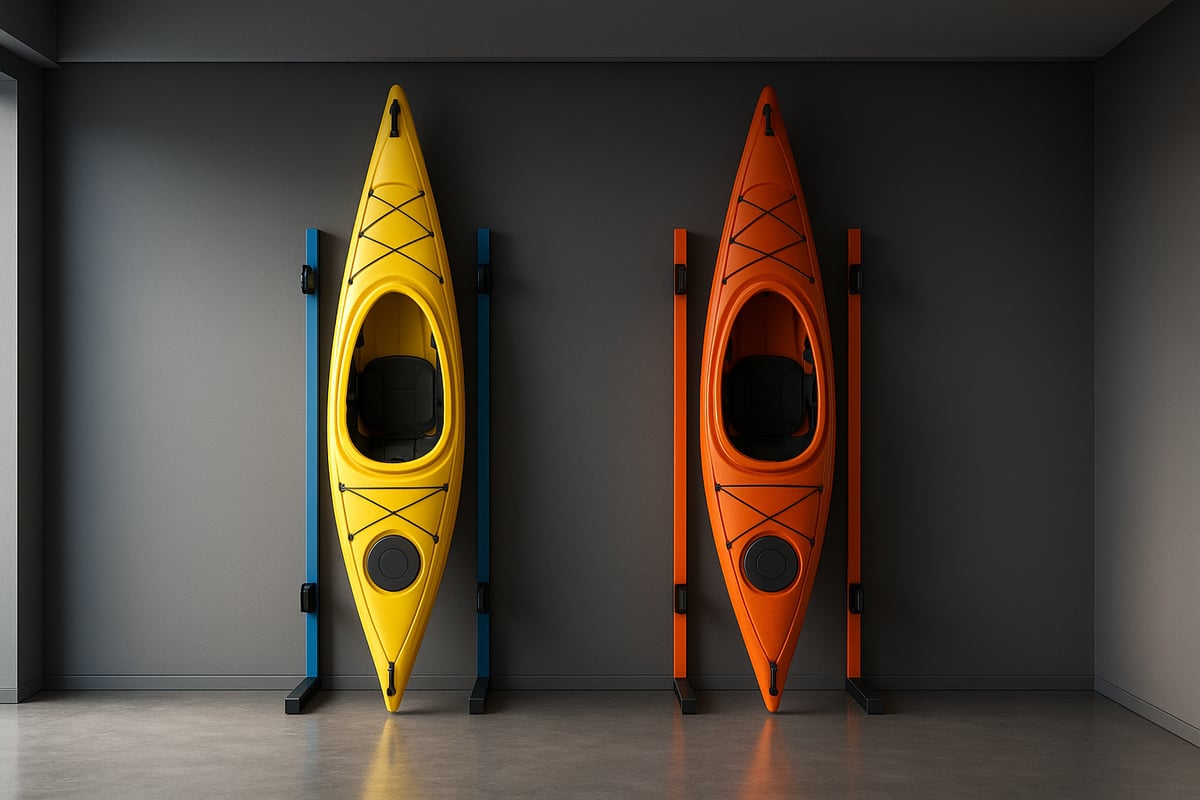
One of the biggest advantages of vertical kayak storage is its ability to save space. By storing kayaks upright, you can reclaim up to 70% more floor area compared to traditional horizontal racks. This is especially valuable for those with limited garage, shed, or apartment space. For example, two full-sized kayaks can fit vertically within a compact 1.5m x 1m footprint, leaving plenty of room for other gear. With vertical kayak storage, even small outdoor areas can be transformed into efficient storage zones.
Protection and Longevity for Your Kayak
Proper vertical kayak storage is designed to preserve the hull shape and integrity of your kayak. When kept upright with adequate support, kayaks are less likely to experience warping or deformation that often occurs with floor or angled storage methods. This approach also minimizes scratches, dents, and UV exposure over time. According to paddling.com, kayaks stored vertically with the right supports show 30% less hull damage after three years compared to other methods. For a detailed breakdown of best practices, check out the How to Store a Kayak Vertically guide.
Safety and Accessibility
Vertical kayak storage significantly reduces tripping hazards and clutter, making it a safer option for busy households or shared spaces. It allows for easier access, enabling one person to retrieve or stow a kayak without assistance. Statistics from leading competitor blogs report 40% fewer storage-related injuries with vertical systems. With this setup, you can feel confident that your storage area is both organized and safe for everyone.
Versatility for Different Kayak Types
No matter what style of kayak you own, vertical kayak storage can accommodate it. These systems are adjustable and suitable for sit-in, sit-on-top, inflatable, and fishing kayaks of various lengths and weights. Whether you have a lightweight recreational kayak or a bulkier tandem model, vertical racks can be tailored to fit your specific needs, ensuring secure and reliable storage.
Aesthetics and Organization
A tidy storage area not only makes your space more functional but also more visually appealing. Vertical kayak storage systems help organize your gear, turning your kayak collection into an attractive display. This method brings order to your garage or outdoor area, making it easier to maintain and showcasing your passion for paddling as a unique design element.
Cost-Effectiveness
Investing in vertical kayak storage can lead to substantial long-term savings. DIY solutions and affordable wall-mounted racks are widely available, allowing paddlers to find options that fit their budget. By preventing hull damage and extending the life of your kayak, these systems help you avoid costly repairs or replacements. Over time, the initial investment pays for itself in both convenience and preservation.
Environmental Protection
Storing your kayak vertically keeps it off damp floors, reducing the risk of mold and mildew. This method also supports eco-friendly storage by minimizing the amount of material needed for racks and stands. When paired with sustainable materials and proper maintenance, vertical kayak storage helps protect both your investment and the environment.
Types of Vertical Kayak Storage Solutions in 2026
Choosing the right vertical kayak storage system in 2026 means balancing innovation, practicality, and the unique needs of your space. From sleek wall-mounted racks to app-enabled smart systems, today's options deliver versatility and protection for every paddler.
Wall-Mounted Racks and Brackets
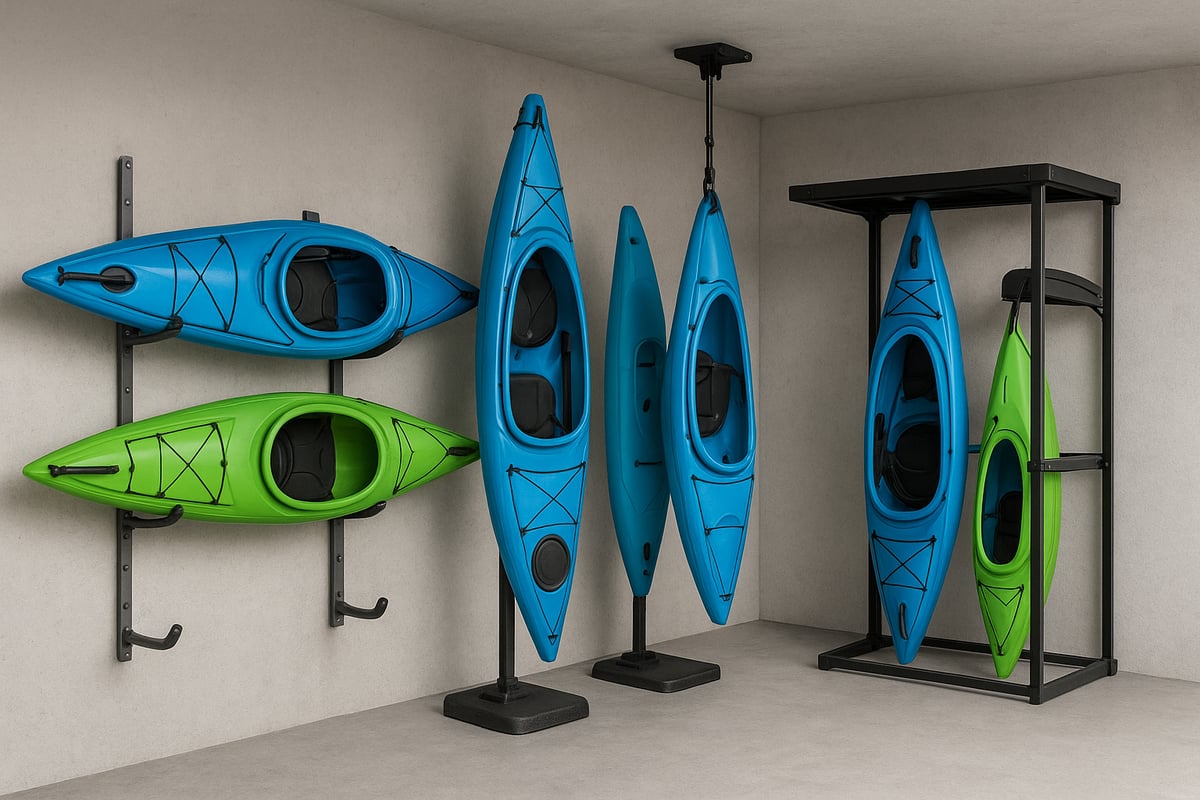
Wall-mounted racks are a cornerstone of vertical kayak storage. In 2026, models use steel, aluminum, or reinforced plastic for maximum strength. Padded arms prevent scratches, while adjustable heights fit various kayak sizes.
Many modular systems allow you to expand and reconfigure as your collection grows. Households with limited floor space find wall racks ideal for storing multiple kayaks vertically within a compact footprint.
- Steel or aluminum frames for durability
- Padding to protect kayak hulls
- Adjustable arms for different lengths and weights
By keeping kayaks off the ground, these racks optimize space and extend gear lifespan.
Freestanding Vertical Storage Systems
Freestanding systems are perfect for renters or those who cannot drill into walls. These floor-based stands use weighted bases and anti-tip designs to keep kayaks upright and secure.
Portability is a key advantage, making it easy to move your vertical kayak storage setup from the garage to a patio or shed. Some models feature locking arms for added security, while others offer stackable options for growing collections.
- No wall installation required
- Weighted bases for stability
- Anti-tip features for safety
Freestanding racks work well in both indoor and outdoor environments, adapting to your storage needs.
Ceiling-Assisted Vertical Hoists
For spaces with high ceilings, ceiling-assisted vertical kayak storage solutions maximize every inch. Pulley and winch systems allow you to raise or lower kayaks with minimal effort, making even heavy models accessible to a single person.
Safety is crucial, so look for hoists with locking mechanisms and easy-to-use controls. Many modern systems are designed to handle up to 50kg, accommodating most recreational kayaks. To see how these space-saving systems work in practice, check out Vertical Lift Storage for Canoes & Kayaks.
- Pulley systems for effortless lifting
- Safety locks to prevent accidental drops
- Ideal for garages with limited wall space
Ceiling hoists free up both floor and wall space, giving you a clutter-free storage zone.
Outdoor Vertical Storage Solutions
Outdoor vertical kayak storage must withstand the elements. In 2026, weatherproof racks use UV-resistant coatings and rust-proof metals to ensure longevity. Lockable arms deter theft, while anchoring systems protect against wind.
These racks are perfect for backyards, patios, or docks. Choose models with adjustable supports to accommodate sit-on-top, fishing, or inflatable kayaks. Regular maintenance ensures your setup remains secure through every season.
- Weatherproof materials and finishes
- Anchoring options for stability
- Lockable features for security
Outdoor storage keeps your kayaks accessible while protecting them from environmental damage.
DIY Vertical Storage Options
DIY vertical kayak storage appeals to hands-on enthusiasts. Building custom racks from timber, PVC, or repurposed materials allows you to tailor the system to your space and budget. Online plans offer step-by-step guidance, covering essential tools and safety tips.
Cost savings are significant compared to commercial racks, and you can customize padding, supports, and finishes. Always use corrosion-resistant hardware for outdoor DIY projects to maximize durability.
- Timber and PVC as affordable materials
- Customizable for unique kayak sizes
- Step-by-step plans available online
DIY solutions let you create vertical kayak storage that’s both functional and personal.
Smart Storage Innovations for 2026
Smart technology is transforming vertical kayak storage. App-connected racks now feature weight sensors, security alerts, and automated locking mechanisms. Some systems track inventory, so you always know which kayak is in use.
Bluetooth integration allows remote monitoring, while modular designs offer future-proof flexibility. These innovations not only increase security but also make managing multiple kayaks easier for busy households.
- App connectivity for real-time monitoring
- Automated locks and tamper alerts
- Modular, upgradable systems
Smart storage is redefining convenience and peace of mind for paddlers.
Storage for Specialized Kayaks
Not all kayaks are created equal. Specialized vertical kayak storage systems cater to tandem, fishing, and extra-wide models. Custom brackets and adjustable supports ensure safe, secure storage for even the heaviest or most awkwardly shaped kayaks.
Look for racks with reinforced arms and wider cradles, or consider modular setups that adapt as your fleet grows. Investing in the right system prevents hull deformation and makes retrieval effortless.
- Adjustable supports for varying widths
- Custom brackets for unique designs
- Expandable options for collections
These solutions guarantee that every kayak, from solo to tandem, is stored safely and stylishly.
Step-by-Step Guide: Installing a Vertical Kayak Storage System
Ready to install your vertical kayak storage system? Follow this detailed, step-by-step guide to ensure your kayak is stored safely, efficiently, and with maximum longevity. Each stage is designed to simplify the process, whether you are a seasoned paddler or a first-time installer.
Step 1: Assess Your Space and Kayak Dimensions
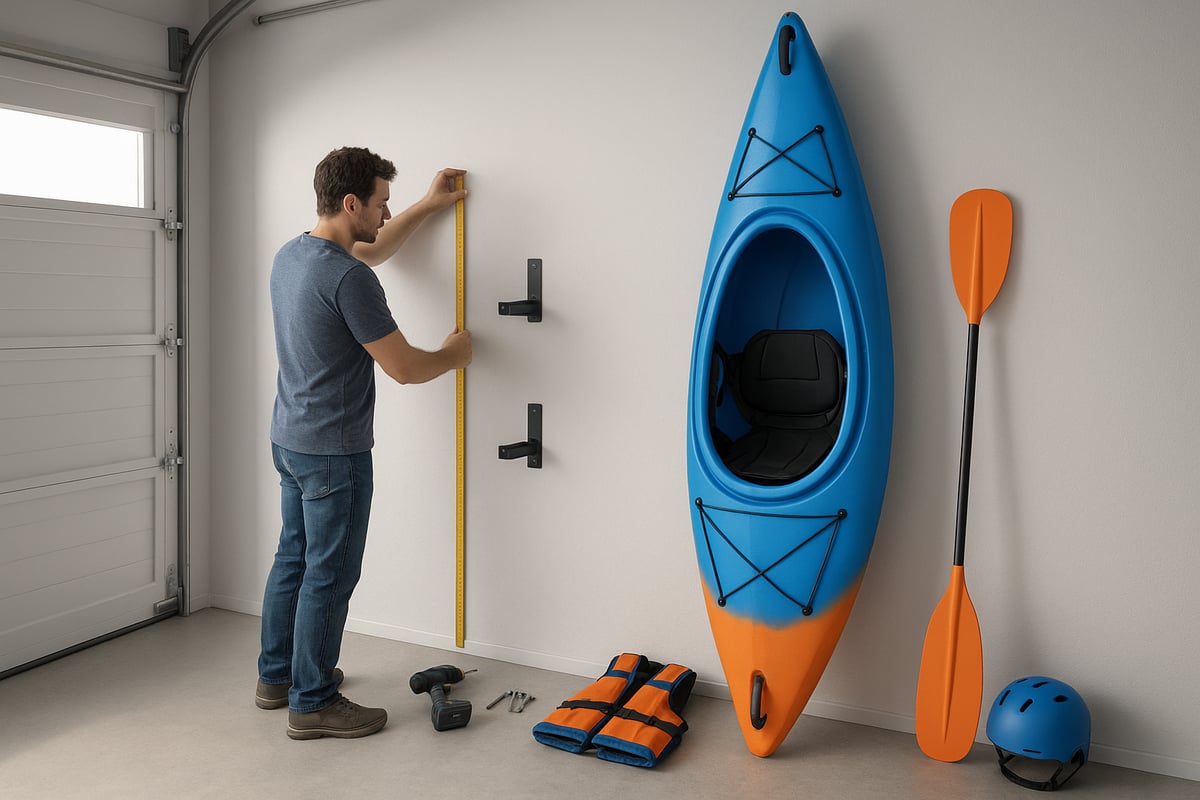
Before installing any vertical kayak storage, measure your available space carefully. Start by checking the wall height, floor area, and ceiling clearance.
Use a tape measure to determine the minimum height needed for your kayak to stand upright. For example, a 12-foot kayak will require at least 3.7 meters of vertical space, plus extra clearance for mounting hardware.
Document your kayak’s length, width, and weight. This ensures your chosen storage system fits both your kayak and your room.
A careful assessment now prevents installation issues later and helps optimize your vertical kayak storage footprint.
Step 2: Choose the Right Storage System
Next, select a vertical kayak storage solution that matches your kayak’s type, weight, and how often you plan to use it.
Wall-mounted racks save floor space but require sturdy walls, while freestanding systems are ideal for renters or garages where drilling isn’t possible.
If children or pets are present, prioritize systems with safety locks or anti-tip features. Compare the pros and cons of each system, keeping your available space and kayak’s size in mind.
A well-matched system will maximize convenience and keep your kayak protected.
Step 3: Gather Tools and Materials
Prepare the necessary tools and materials before you begin. At minimum, you’ll need:
- Drill and drill bits
- Stud finder
- Level
- Anchors and brackets
- Padding or foam supports
- Safety gear (gloves, goggles)
For outdoor or shed installations, use corrosion-resistant hardware. Explore shed accessories for kayak storage for specialized supports and weatherproof options.
Having everything ready ensures your vertical kayak storage setup is smooth and efficient.
Step 4: Mark and Prepare the Installation Area
Locate wall studs using your stud finder, or find a secure, level floor area for freestanding racks. Mark the intended drill points with a pencil, ensuring horizontal alignment with your level.
Avoid electrical or plumbing hazards by checking for wires or pipes before drilling.
Clear the installation area of clutter, and lay out all parts and hardware for easy access.
Proper preparation at this stage is key to a safe and sturdy vertical kayak storage installation.
Step 5: Install the Storage System
Begin by anchoring the brackets or assembling the freestanding rack according to manufacturer instructions.
For wall-mounted systems, use the marked points to drill pilot holes into wall studs. Attach brackets securely, then test their strength by gently applying pressure.
For freestanding racks, follow the assembly steps, ensuring all joints are tight and the base is level.
Refer to video tutorials or instruction manuals for extra guidance. Load testing now prevents future accidents and ensures your vertical kayak storage system will hold up over time.
Step 6: Secure and Position the Kayak
With the system in place, carefully lift your kayak upright. Use straps, bungee cords, or locking arms to secure it firmly to the rack.
Check for even weight distribution and ensure the kayak is balanced. Anti-slip pads can help prevent tip-overs, especially on smooth floors.
Leave enough clearance around the kayak for safe access.
Proper positioning keeps your vertical kayak storage functional and your equipment safe from accidental damage.
Step 7: Safety Checks and Final Adjustments
Inspect the entire installation for wobble, loose hardware, or obstructions. Tighten any bolts or screws as needed.
Walk around the storage area to confirm there are no tripping hazards or blocked pathways.
Create a maintenance checklist: check all hardware monthly, replace worn padding, and test the kayak’s stability regularly.
By performing these safety checks, your vertical kayak storage will remain reliable and secure for years to come.
Maintenance and Best Practices for Vertical Kayak Storage
Proper care ensures your vertical kayak storage system remains reliable and extends the life of your kayak. Routine maintenance preserves functionality and guards your investment, offering peace of mind season after season.
Regular Inspection and Cleaning
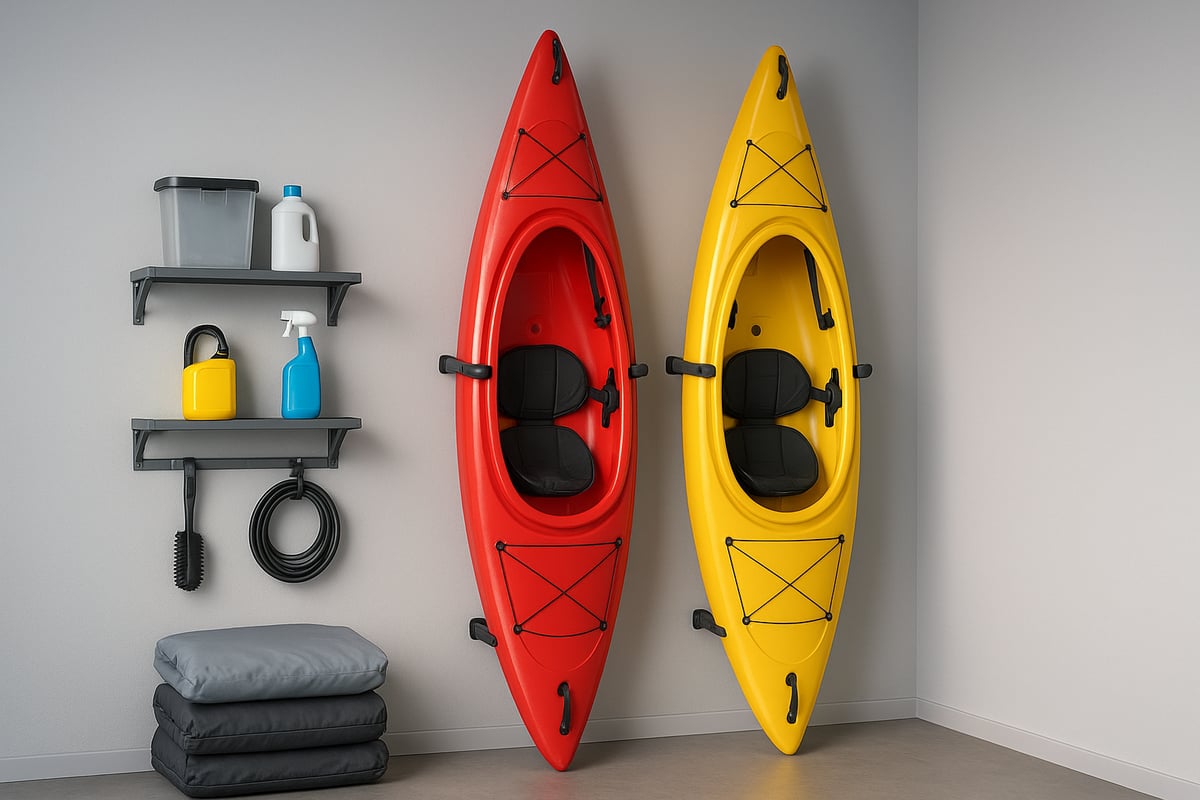
Consistent inspection is key to keeping your vertical kayak storage system in optimal condition. Every two months, check for signs of rust, corrosion, or fatigue on racks and mounting hardware. Wipe down kayak hulls before storing to prevent mold and mildew accumulation.
A simple cleaning routine includes rinsing saltwater residue, drying thoroughly, and inspecting for scratches or dents. For a detailed maintenance checklist and year-round organization tips, refer to this helpful Guide to Kayak Storage: Keeping Your Boats Organized Year-Round.
Protecting Against Weather and UV Damage
If your vertical kayak storage is outdoors, shield your kayaks from weather and sunlight. Use UV-resistant sprays or fitted covers to minimize fading and structural degradation. Studies show that unprotected kayaks exposed to sunlight can lose up to 20 percent of their lifespan.
Ensure rack materials are weatherproof and inspect coatings regularly. By prioritizing protection, you prevent premature wear and help your kayak maintain its integrity for years.
Seasonal Adjustments and Off-Season Tips
Adjust your vertical kayak storage setup with the seasons. Rotate kayaks periodically to distribute pressure evenly, reducing the risk of hull deformation. Before storing for extended periods, remove all accessories, drain water, and loosen straps to prevent stress points.
During the off-season, consider relocating kayaks to a sheltered area or using additional covers for added protection. Proper seasonal care maximizes longevity and readiness for your next adventure.
Security Measures
Security is crucial, especially for outdoor vertical kayak storage systems. Install lockable arms or integrated cable locks to deter theft. Some advanced racks feature alarms or motion sensors, offering extra peace of mind.
Secure mounting and anti-tip features also reduce the risk of accidental falls. Always lock your kayak after each use, particularly in shared or accessible spaces.
Addressing Common Storage Issues
Occasionally, you may encounter problems such as warped hulls, rack instability, or slipping kayaks. Inspect mounting points regularly and tighten any loose hardware. Replace worn or compressed padding to maintain a snug fit.
For more troubleshooting ideas and expert tips, explore the Tips from the Coola blog, which covers a range of storage challenges and solutions for vertical kayak storage systems.
Extending the Life of Your Storage System
Routine upkeep ensures your storage system remains safe and effective. Lubricate moving parts, such as hoist pulleys or locking mechanisms, to prevent sticking. Replace straps, bungees, or padding as they show signs of wear.
Regularly check for misalignment or sagging, and adjust as needed. A well-maintained system protects both your kayak and your storage investment.
Environmental Considerations
Opt for eco-friendly cleaning products and sustainable materials when maintaining your vertical kayak storage. Avoid harsh chemicals that could damage the kayak or harm the environment.
Look for systems made from recycled metals or plastics and consider repurposing materials for DIY repairs. Sustainable maintenance practices help preserve both your equipment and the outdoors you love.
Innovations and Trends in Vertical Kayak Storage for 2026
The world of vertical kayak storage is evolving rapidly, with 2026 set to offer smarter, safer, and more sustainable solutions than ever before. As paddlers seek to maximize convenience and protect their gear, new trends are shaping the future of kayak storage.
Smart Storage Technologies
Smart technology is redefining vertical kayak storage in 2026. Home automation systems now integrate seamlessly with digital racks, allowing voice-activated adjustments and real-time monitoring through mobile apps. These advanced racks can notify you if your kayak shifts position or if someone tampers with the locking mechanism.
Leading models feature Bluetooth connectivity, weight sensors, and automated inventory tracking. According to the 2026 Paddling Magazine Industry Awards, several new smart racks have been recognized for their innovation and user-friendly design.
Sustainable Materials and Eco-Friendly Designs
Sustainability is at the forefront of vertical kayak storage trends. Manufacturers are embracing recycled plastics, responsibly sourced bamboo, and low-impact metals to reduce environmental impact. In fact, industry surveys reveal that 35% of new kayak racks use recycled materials.
Modular and upgradable designs also contribute to sustainability, enabling users to expand or adapt their storage without waste. Eco-conscious paddlers can now choose systems that minimize material use and prioritize long-term durability.
Enhanced Safety Features
Safety remains a top priority in the latest vertical kayak storage systems. Automatic locking mechanisms, tip-over sensors, and child-proofing enhancements are now standard in many models. These features not only protect your kayak but also ensure a safe environment for families.
Tip-over sensors provide instant alerts if instability is detected, while child-proof locks prevent accidental access. Such advancements contribute to a significant reduction in storage-related injuries and accidents.
Customization and Modularity
Personalization is a driving force in vertical kayak storage innovation. Adjustable arms, a range of color options, and branding capabilities allow paddlers to tailor storage to their needs and style. Expandable racks accommodate growing collections, making it easier to display multiple kayaks.
For those seeking adventure-ready setups, Adventure storage solutions offer modular systems designed for flexibility and scalability. This adaptability ensures your storage remains functional as your interests evolve.
Market Insights and Consumer Preferences
Recent surveys indicate a strong shift toward vertical kayak storage, with 60% of new kayak owners preferring these systems for their space-saving benefits. Consumers are demanding compact, multi-use storage solutions that blend seamlessly into home and garage environments.
Future-Proofing Your Storage Setup
Choosing adaptable vertical kayak storage is essential for long-term value. Look for systems that can accommodate new kayak models and accessories as they are released. Planning ahead ensures your storage investment remains relevant as your collection and needs grow.
As you explore the benefits of vertical kayak storage and the latest innovations for 2026, it is clear that optimizing your space starts with choosing the right foundation. A sturdy, weatherproof steel garden shed not only protects your kayak and gear but also ensures long term durability and organization for your outdoor equipment. If you are ready to take your storage to the next level, consider the added value of free delivery on a premium shed option. Discover how you can streamline your outdoor space with Free Delivery on your Alpine Steel Garden Shed and create the perfect environment for your kayak storage needs.
Discover more from Coola Living Ireland
Subscribe to get the latest posts sent to your email.