
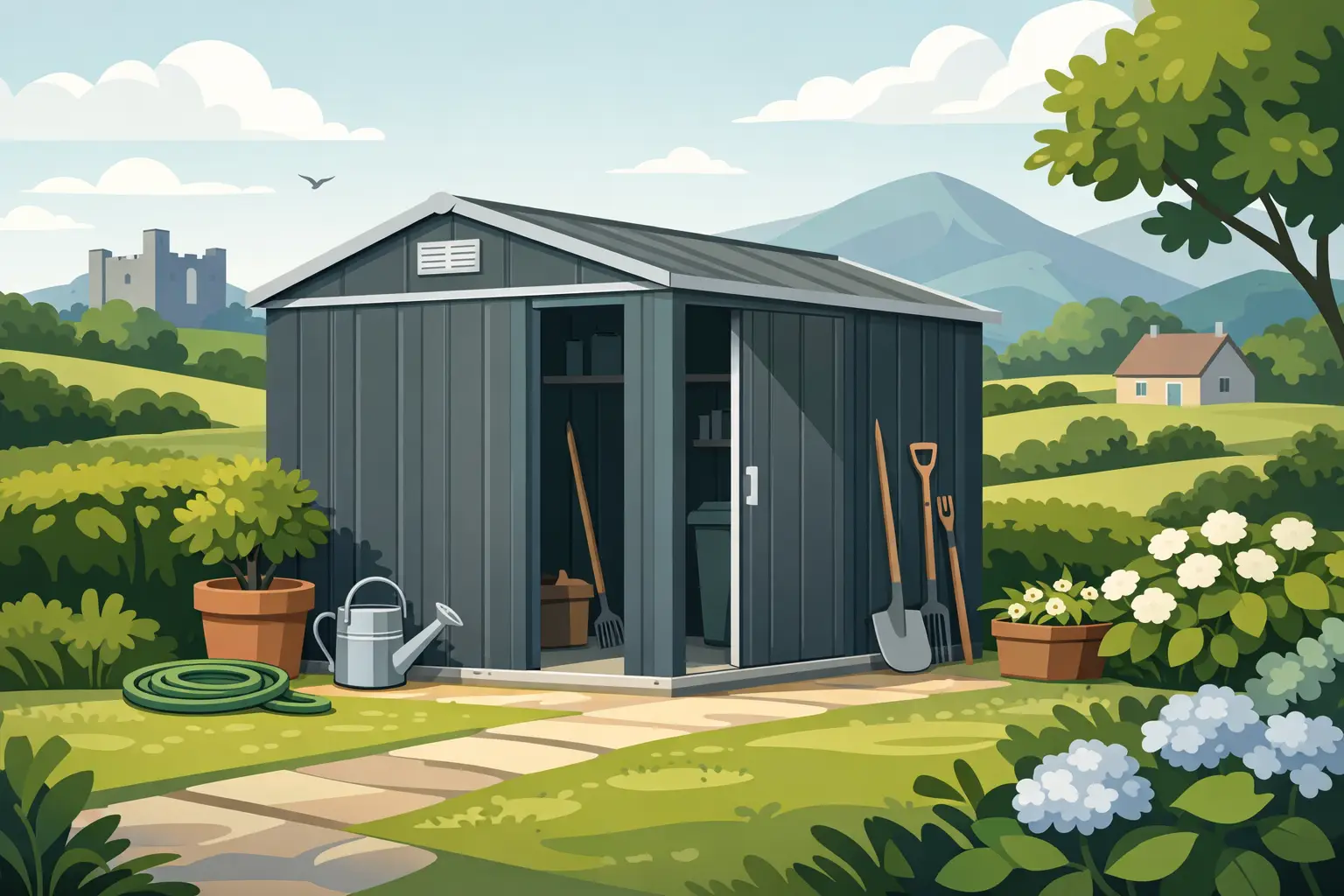
A steel shed can be the difference between a tidy garden and a constant battle with damp timber, cluttered hallways and tools left under a tarpaulin. The best steel garden sheds give Irish households dependable, lockable storage without demanding yearly painting or treatment. But a good shed is not simply the biggest one that fits the space. Its base, door opening, roof design and internal layout all matter just as much.
For lawnmowers, bicycles, garden furniture, DIY equipment and the usual collection of garden bits that seems to grow every year, steel is a sensible long-term choice. It suits exposed gardens particularly well, provided it is correctly installed and anchored.
What makes a steel garden shed a good buy?
Steel sheds are often chosen for their low maintenance and clean, practical appearance. Quality galvanised steel panels are made to resist corrosion, while a painted or powder-coated finish adds another layer of protection and gives the building a smarter look in the garden. Compared with many timber sheds, there is no routine staining, treating or concern about rot.
Security is another major reason to choose steel. The panels and framed doors offer a more difficult barrier than lightweight plastic storage, especially when the shed has a proper lockable handle or can accept a sturdy padlock. That said, no garden shed should be treated as a safe for expensive tools. A secure base, good anchoring and sensible placement away from easy concealment are all part of protecting what is inside.
The trade-off is that steel sheds need careful assembly. Panels must be square, screws correctly tightened and the structure fixed down to a suitable foundation. A rushed build can lead to misaligned doors, leaks around the roof or panels that flex in strong winds. Taking time over the base pays back for the life of the shed.
Choosing the best steel garden sheds by size
Start with what needs to go inside, then allow room to reach it. Many people buy a shed based on its external footprint and only later find that a lawnmower cannot turn around inside, or that two bikes block the doorway.
A compact 5 x 3 ft or 6 x 4 ft steel shed works well for hand tools, folded chairs, a small mower and gardening supplies. It is a practical option beside a patio or down the side of a house where space is limited. For a typical family garden, 8 x 6 ft is often the useful middle ground. It has enough room for larger equipment, bicycles and shelving without taking over the garden.
If you are storing several bikes, a ride-on mower, bulky furniture cushions or trade equipment, look towards 10 x 8 ft and larger. The extra depth makes a real difference. You can create a clear walkway instead of having to empty half the shed to reach one item at the back.
Check the door as closely as the floor area
A wide double door is worth prioritising if you will store a mower, wheelbarrow, barbecue or bicycles. Check both the stated door width and the internal headroom. On compact sheds, the opening can be considerably narrower than the overall front panel.
Sliding doors are popular because they do not swing into a path or patio. Hinged doors can provide a wider opening, but they need clear space in front of the shed. Neither is automatically better – the right choice depends on where the shed will sit and what you need to move through it.
Steel thickness, finish and weather protection
Not all metal sheds are built to the same standard. A shed made from thin panels may be perfectly suitable for basic seasonal storage in a sheltered garden, but it will not feel as solid as a heavier-gauge model with reinforced framing. For a coastal, windy or very open site, choose a sturdier construction and make sure the manufacturer’s anchoring guidance is followed.
Galvanised steel is the key term to look for. This means the steel has a protective zinc coating designed to help prevent rust. A coated finish in anthracite grey, green or a neutral stone colour can also help the shed sit neatly alongside fencing, paving and modern garden furniture.
Weather resistance does not mean neglecting ventilation. Condensation can form when warm, damp air meets a cold metal roof, particularly if wet bikes, hoses or garden tools are stored inside. Built-in vents help air circulate, while keeping the shed organised and avoiding damp items pressed against the walls will help too. For valuable equipment, consider adding shelving so items stay off the floor.
The base matters more than most buyers expect
A steel shed needs a flat, level and firm foundation. It is not designed to sit directly on grass or bare soil. Ground movement can twist the frame, make doors difficult to operate and allow moisture to collect underneath.
A concrete slab is the most durable option for a permanent shed. Paving slabs on a well-prepared, level sub-base can also work well, provided they cover the entire footprint and do not rock. A purpose-made floor kit is useful where available, but it generally supports a floor surface rather than replacing the need for proper ground preparation.
Before ordering, measure the site with room to work around the shed during assembly. Leave enough access to clear gutters, clean behind the building if needed and open the doors comfortably. Avoid placing the shed under a tree that drops heavy branches or where roof run-off from another building will pour directly onto it.
Features worth paying for
The best value is not always the lowest upfront price. A slightly better-specified shed can save frustration in fitting and give you more useful storage for years. When comparing models, focus on the features that affect daily use:
- Lockable doors with a solid closing mechanism for better everyday security.
- Reinforced wall or roof framing for stability, especially in exposed locations.
- Integrated ventilation to reduce stale air and condensation.
- A floor frame or compatible floor kit to help create a clean, usable interior.
- Wide access doors when storing wheeled or awkward equipment.
Windows can be useful if you want to find things without switching on a light, but they are not essential for every shed. Windowless models offer more wall space for hooks and shelving and can be more discreet for tool storage. If security is your main concern, a simple window-free design is often the better fit.
Making a steel shed work harder
A steel shed is most useful when it is planned like a small storeroom rather than treated as a dumping ground. Put the heaviest and least-used items at the back, keep everyday tools near the entrance and use vertical space for rakes, spades and folding chairs. Wall-mounted hooks and freestanding shelves can transform even a compact footprint.
For bicycles, leave enough space between handlebars and protect the walls from repeated contact. If you store fuel, chemicals or paint, keep containers sealed, upright and away from direct heat. Never store a running petrol-powered machine in a closed shed, and allow mowers or tools to cool before putting them away.
It is also worth thinking about access through the year. A shed placed at the far end of the garden may look tidy, but it is less likely to be used properly in wet weather. Position it where you can reach bikes, tools and bins without trampling across a soaked lawn.
When steel is not the right answer
Steel is excellent for secure, low-fuss storage, but it is not right for every garden building project. If you want a workshop, hobby room or somewhere to spend time in winter, a timber building with insulation and a more substantial interior finish may be a better option. If you only need a small place for cushions and children’s outdoor toys, a compact plastic storage box may be easier and more economical.
For customers deciding between sizes, materials or foundation options, Coola Living can help make sure the chosen shed suits the site as well as the storage list. A few measurements and a clear idea of what is going inside usually prevent the most common buying mistakes.
Choose a shed with enough room for the next season as well as this one, prepare the base properly and anchor it securely. You will have a practical garden space that keeps the clutter out of sight and the equipment ready when you need it.
Discover more from Coola Living Ireland
Subscribe to get the latest posts sent to your email.