
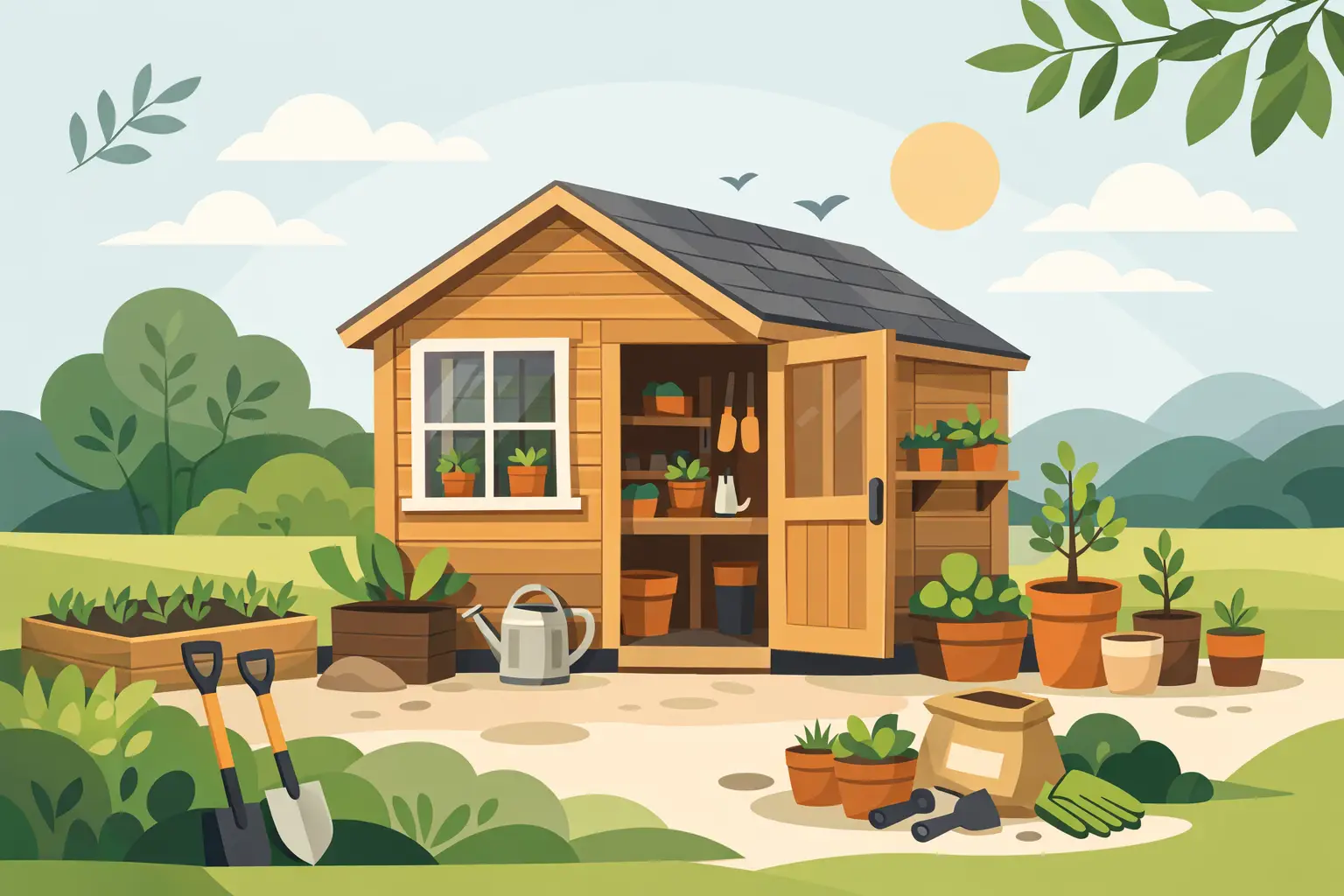
A potting shed earns its space by making garden jobs easier. Instead of carrying trays, compost, tools and young plants back and forth from the house or garage, you have a bright, practical workspace where everything is ready to use. The best timber potting shed is not simply the largest shed you can fit into the garden. It is one with enough natural light, sensible internal room, weather protection and a solid base to stay useful through every season.
For gardeners in Britain and Ireland, timber remains a popular choice because it looks at home in a garden and is easy to adapt. Add shelves, hooks, a potting bench or a few extra storage boxes and it can become a genuinely hard-working part of your outdoor space. The key is choosing the specification to suit how you garden, rather than being drawn in by a photo alone.
What makes the best timber potting shed?
A standard garden shed is designed chiefly for storage. A potting shed is designed around light and workspace. Its defining feature is usually generous front-facing glazing, often positioned above a solid lower panel. This lets daylight reach a bench while leaving wall space below for tools, bags of compost and containers.
That extra glazing makes a real difference when sowing seeds, taking cuttings or repotting plants on a grey spring morning. It also makes the building more pleasant to use, which matters if you want somewhere to spend time rather than somewhere you only visit to fetch a spade.
The right choice depends on the balance you need between growing space and secure storage. If the shed will hold a lawnmower, bicycles or bulky furniture as well as gardening equipment, choose a larger footprint or a layout with a clear storage end. If its main job is propagation and potting, prioritise window area, bench space and easy access.
Look for good glazing, not just lots of it
More windows are not automatically better. Full-height glass can reduce useful wall space, make it harder to hang tools and allow the interior to overheat on sunny days. A row of well-positioned windows above the potting bench is often the most practical arrangement.
Toughened safety glass is worth considering, particularly in a busy family garden. It is stronger than standard horticultural glass and breaks more safely if an accident happens. Horticultural glass can be a value-led option, but it needs more care during installation and day-to-day use. Polycarbonate glazing is light and impact-resistant, although some gardeners prefer the clarity and traditional finish of glass.
Think about where the windows face, too. A south-facing shed receives the most direct sun, which is useful in early spring but can create too much heat in summer. East-facing light is gentler and often ideal for a regular potting area. If the garden dictates a sunny position, opening windows and shade from nearby planting can help keep temperatures manageable.
Choose a size that leaves room to work
A 6 ft x 4 ft timber potting shed can suit a compact garden and a gardener who needs one bench, a few shelves and basic tool storage. It is a sensible starting point, but it can feel tight once seed trays, watering cans and bags of compost arrive.
For most households, a 6 ft x 8 ft or 8 ft x 6 ft model offers a more comfortable working layout. It gives you room for a bench along the glazed side, shelving above, storage at the opposite end and a clear path through the middle. That walking space is easy to overlook, but it is what stops a useful shed becoming a cluttered one.
Larger buildings make sense for keen gardeners who raise vegetables, flowers or bedding plants in quantity. They can also work well as a shared garden store and workspace. Before deciding, mark out the proposed footprint with string or cardboard on the ground. Include space for the door to open and consider whether you can comfortably carry a wheelbarrow, mower or large planters to the entrance.
Do not overlook door position and height
Single doors work well for most potting sheds, but double doors are useful if you will store wider equipment. A door placed at the gable end often leaves longer side walls free for a bench and shelving. A door on the front can make access simpler in a narrow garden, although it may reduce the amount of glazed working wall.
Check the internal and eaves height rather than relying on overall external measurements. You want enough headroom to stand comfortably, lift seed trays from shelves and use a bench without feeling boxed in. Taller sheds also allow for high-level shelving, which is valuable for keeping spare pots and lightweight equipment out of the way.
Timber quality and treatment matter in wet weather
A timber shed can give many years of service, but its lifespan depends on the quality of the cladding, the framing and the care taken after installation. For a garden building exposed to rain, wind and changing temperatures, thicker timber generally provides a more substantial, stable feel.
Overlap cladding is usually the budget-friendly option and directs rainwater down the wall effectively. Shiplap cladding has interlocking boards with a neater finish and can offer better resistance to wind-driven rain. Tongue-and-groove cladding is often the premium choice, creating a strong, close-fitting wall that is particularly suited to a frequently used workshop-style shed.
Pressure-treated timber is a practical choice for reducing maintenance. The preservative is forced into the wood, helping protect it against fungal decay and insect attack. Dip-treated timber can still be a good value option, but it normally needs a suitable preservative treatment sooner and more regularly.
Treatment does not mean neglect. Inspect the shed annually, keep leaves and soil away from the base of the walls, and maintain any protective finish recommended for the building. A timber shed needs air to circulate around it. Avoid pushing it directly against a hedge, fence or wall where damp can linger.
Start with a level, durable base
Even the best timber potting shed will disappoint if it is installed on an uneven or poorly drained base. Doors may stick, windows can go out of alignment and water can collect beneath the floor. A sound base is not an optional extra – it is fundamental to how the shed performs.
A concrete slab is long-lasting and well suited to larger sheds, provided it is level and correctly sized. Paving slabs on a compacted, level foundation can also work well. Plastic shed-base grids filled with gravel are another practical option, offering drainage and a cleaner installation than placing a shed directly on soil or grass.
The base should be level, firm and at least the same size as the shed floor. Raising it slightly above the surrounding ground helps prevent splashback and standing water. Allow a clear route for rainwater to drain away from the building, especially if the garden is prone to becoming waterlogged in winter.
Build in ventilation and practical storage
A potting shed needs fresh air. Warm, humid conditions can encourage mould, while compost, fertiliser and damp trays soon make a small enclosed space feel unpleasant. Opening windows are useful, and fixed vents near the roofline can improve airflow without creating a draught at bench level.
Inside, start with one sturdy potting bench at a comfortable working height. Open shelving above it keeps labels, hand tools and seed packets visible. Hooks on an unglazed wall are ideal for forks, trowels and secateurs, while sealed storage containers keep compost additives and feed dry and away from pests.
If power is available through a properly installed outdoor supply, lighting can extend the shed’s usefulness in autumn and winter. However, it is not essential. A bright window layout, a clear roof panel where appropriate and a well-planned work surface will do more for everyday usability than filling the building with gadgets.
Match the shed to your garden and your routine
A traditional apex roof gives a classic shed appearance and useful height through the centre. A pent roof may suit a boundary position or a more contemporary garden, while directing rainwater in one clear direction. Whichever style you choose, make sure the roof covering is suitable for local weather and that the building can be accessed for occasional maintenance.
Consider delivery and assembly before ordering. A larger timber shed arrives in panels and needs a clear route through the garden, as well as enough room for safe installation. If the path is narrow, a smaller model or professional assembly can remove a great deal of hassle. Coola Living can help customers weigh up dimensions, base requirements and assembly needs before they commit.
The best choice is often a shed with a little more room and a slightly stronger specification than you first planned. Gardening equipment has a habit of growing over time, and a dry, bright shed soon becomes useful for far more than potting. Choose one that suits your space, give it a proper base and keep it maintained, and it will be ready whenever the garden is.
Discover more from Coola Living Ireland
Subscribe to get the latest posts sent to your email.