
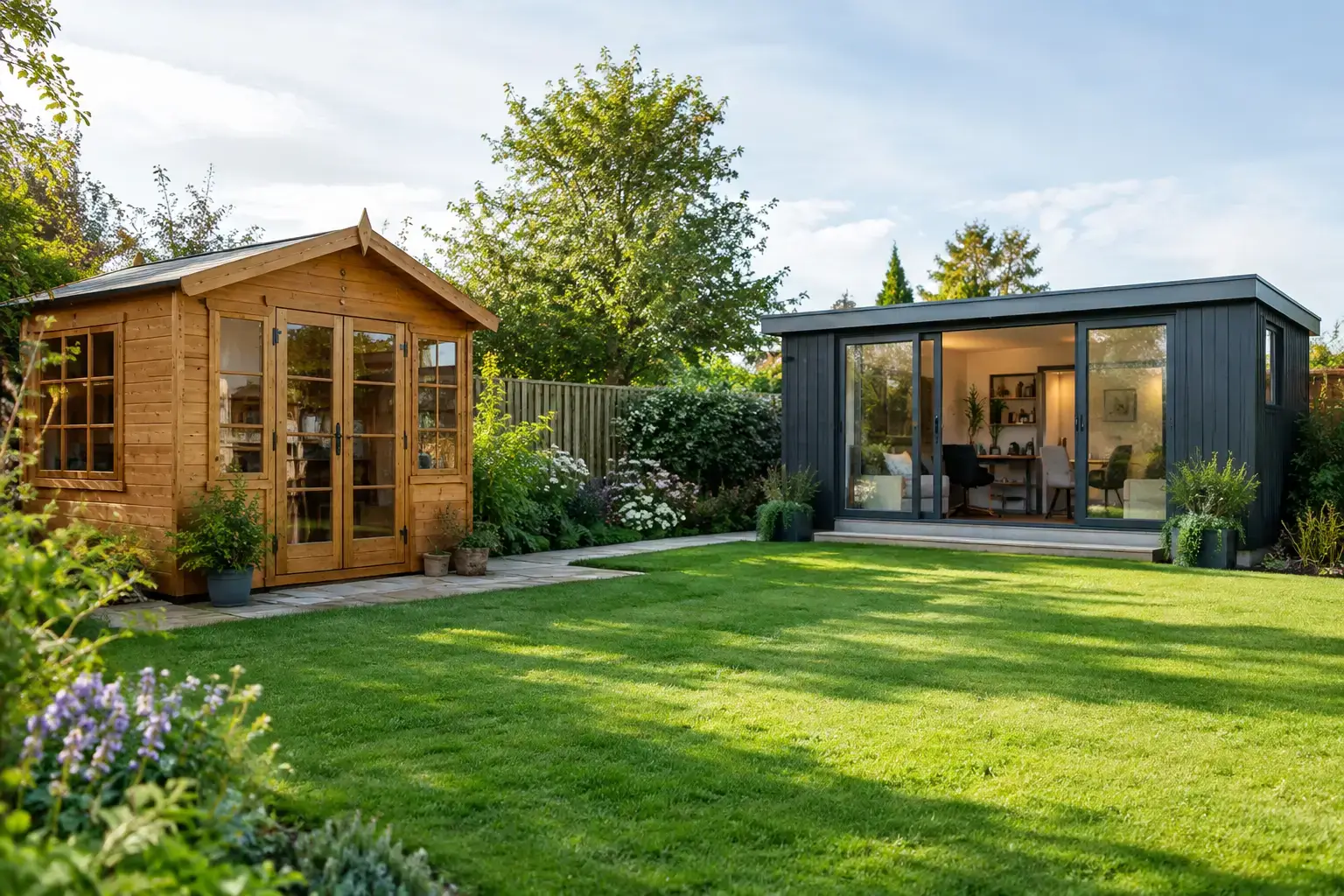
A garden building can solve a problem that has been creeping up for years: bikes blocking the side passage, tools taking over the utility room, damp boxes in a cramped shed, or a house that suddenly needs somewhere quiet to work. The best garden buildings do more than add square metres. They give everyday belongings a proper home and make the garden easier to enjoy.
The right choice is rarely just about picking the biggest building that will fit. Its use, position, base, material and access all affect whether it feels genuinely useful five years from now. Start with the job it needs to do, then choose the structure around that.
Start with the job your building needs to do
A compact store for a lawnmower and a few garden tools has very different requirements from a workshop, home office or family summer house. Storage-led buildings benefit from wide doors, low thresholds and enough depth to reach items at the back. If bicycles are involved, think about turning space as well as floor area. A building can look generous on a product listing but feel tight once handlebars, shelving and a mower are inside.
For a workspace or hobby room, comfort moves higher up the list. You may need windows for daylight, a lockable door, insulation, ventilation and a sensible route for electricity. A summer house is often chosen for relaxing or entertaining, so door position, glazing and the view back towards the house matter more than the amount of wall space.
It is worth planning for the next use too. A garden store may later become a small workshop. Choosing a little extra floor space and a door wide enough for larger equipment can prevent an expensive replacement later.
Measure the site, not just the available gap
Measure the proposed base area carefully, then allow room around the building for access, maintenance and opening doors. Check overhead branches, gutters, slopes and boundary walls. A building placed tightly between a fence and the house may be hard to paint, clean or repair when it eventually needs attention.
Also consider how the building will arrive and how materials will reach the garden. Narrow side entrances, steps, sharp corners and shared access can all influence the most practical size and format. This is particularly relevant for larger timber buildings and cabins, where individual components may be substantial.
Door placement deserves a proper pause. Doors facing the house are convenient for daily use, but a side-facing door can make better use of a narrow garden. Double doors are useful for ride-on equipment, wheelbarrows and larger furniture. For a building intended mainly for bikes or bins, a lower threshold can make every trip in and out easier.
Choose a material that suits the use and upkeep
There is no single best material for every garden. The sensible choice depends on budget, appearance, security expectations and how much maintenance you are happy to take on.
Timber garden buildings
Timber has a warm, traditional look and suits gardens where the building will be a visible feature rather than simply a place to put tools. It is a popular option for workshops, summer houses and cabins because it can feel more inviting inside. A well-made timber building can offer excellent service, but it needs a sound base and ongoing treatment to protect it from the Irish weather.
Thickness, framing and roof construction matter. A lightweight timber store may be perfectly adequate for seasonal equipment, while a building used year-round needs a stronger specification and often benefits from insulation. Do not assume every timber structure is ready for electrical work or regular occupancy without checking its construction first.
Steel garden buildings
Steel is a practical choice for secure, low-maintenance storage. It works well for tools, garden equipment and bicycles, particularly where a clean, functional finish is preferred. Quality varies, so look beyond the overall dimensions. Consider panel thickness, reinforcement, door design, anchoring points and whether a floor is included or needs to be added.
Steel can be an excellent value option, but it should be properly ventilated. Without airflow, condensation can affect stored items, especially metal tools, textiles and cardboard boxes. A raised floor or moisture barrier helps protect contents from damp rising through the base.
Plastic and vinyl garden buildings
Plastic and vinyl buildings are popular where simple upkeep is a priority. They will not need regular painting and can suit busy households that want weather-resistant storage with a tidy appearance. They are often straightforward to clean, although they still need a level, solid foundation and secure anchoring.
They may not offer the same traditional character as timber, and interior fixing options can be more limited. If you want to hang heavy tools or install extensive shelving, check what internal reinforcement is available rather than assuming the wall panels will take the load.
The base is part of the building
A good garden building on a poor base will soon show the consequences: doors that stick, uneven floors, water ingress and unnecessary strain on panels or joints. The base should be level, firm and large enough to fully support the building footprint. It should not slope away under the walls or leave corners unsupported.
Concrete is a reliable long-term choice for heavier buildings, workshops and garages. Paving slabs can work well when they are laid on a stable, level sub-base. Some smaller structures can sit on purpose-made foundation systems, provided the ground preparation is suitable and the manufacturer permits it.
Keep the base slightly above surrounding ground level where possible, so surface water is less likely to run towards the building. Drainage is especially important in gardens with heavy soil or areas that hold water after prolonged rain. It is much easier to deal with this before delivery than after a building is full of possessions.
Plan for weather, ventilation and security
Garden buildings have to cope with wind, rain, changing temperatures and long periods of damp. Roof design and covering deserve as much attention as wall material. Check that water will run away from doors and neighbouring structures, and keep gutters, overhanging branches and nearby vegetation from creating a permanently wet corner.
Ventilation matters even in a basic storage shed. It reduces condensation and helps protect lawnmowers, power tools, bicycles and cushions. For buildings used as offices or hobby spaces, opening windows and insulation become more important. A bright glazed building may be pleasant in spring but can become very warm in direct summer sun, so orientation and shading are worth considering.
Security starts with location. A building visible from the house can be a better deterrent than one hidden at the far end of the garden, although privacy may be more valuable for a workspace. Choose lockable doors, secure hinges and a suitable anchor point for bicycles or valuable equipment. Remember that a lock is only as useful as the door, frame and anchoring around it.
Check planning and practical services early
Many domestic garden buildings can be installed without formal planning permission, but this depends on factors such as height, location, size, use and the property itself. Rules can differ for protected structures, estates with conditions, properties near boundaries and buildings intended for more than incidental domestic use.
Treat planning as an early check rather than a last-minute detail. Measure the proposed height as well as the footprint, and contact the relevant local authority or a qualified adviser if there is any uncertainty. A garden room used occasionally for work is not the same thing as a separate commercial premises, and the distinction can matter.
If you expect to add lighting, sockets, heating or internet, plan cable routes before the base is finished. Electrical work should be designed and completed by a suitably qualified electrician. For a simple store, solar lighting may be enough. For a workshop or office, a properly planned supply is safer and more useful than trailing an extension lead across a wet garden.
Spend where daily use will notice it
Not every upgrade adds equal value. For a building used once a month, a basic model with a good base and secure lock may be all that is needed. For something used every day, it is often worth investing in stronger doors, better roof materials, useful shelving options, improved glazing or insulation.
Think about the small frustrations that build up over time. A door that is too narrow, no place to put wet boots, insufficient headroom over a workbench or no ventilation for stored bikes can make a new building feel poorly planned. Conversely, a few well-chosen extras can make a modest structure work brilliantly.
Coola Living can help make the selection process more straightforward, particularly where size, material, access or storage layout is uncertain. The aim is not to buy the most elaborate building in the range, but one that fits the site, budget and job properly.
A garden building earns its place when it removes hassle from daily life. Give the base, access and intended use as much thought as the style, and you will end up with a space that stays useful through changing seasons and changing needs.
Discover more from Coola Living Ireland
Subscribe to get the latest posts sent to your email.