
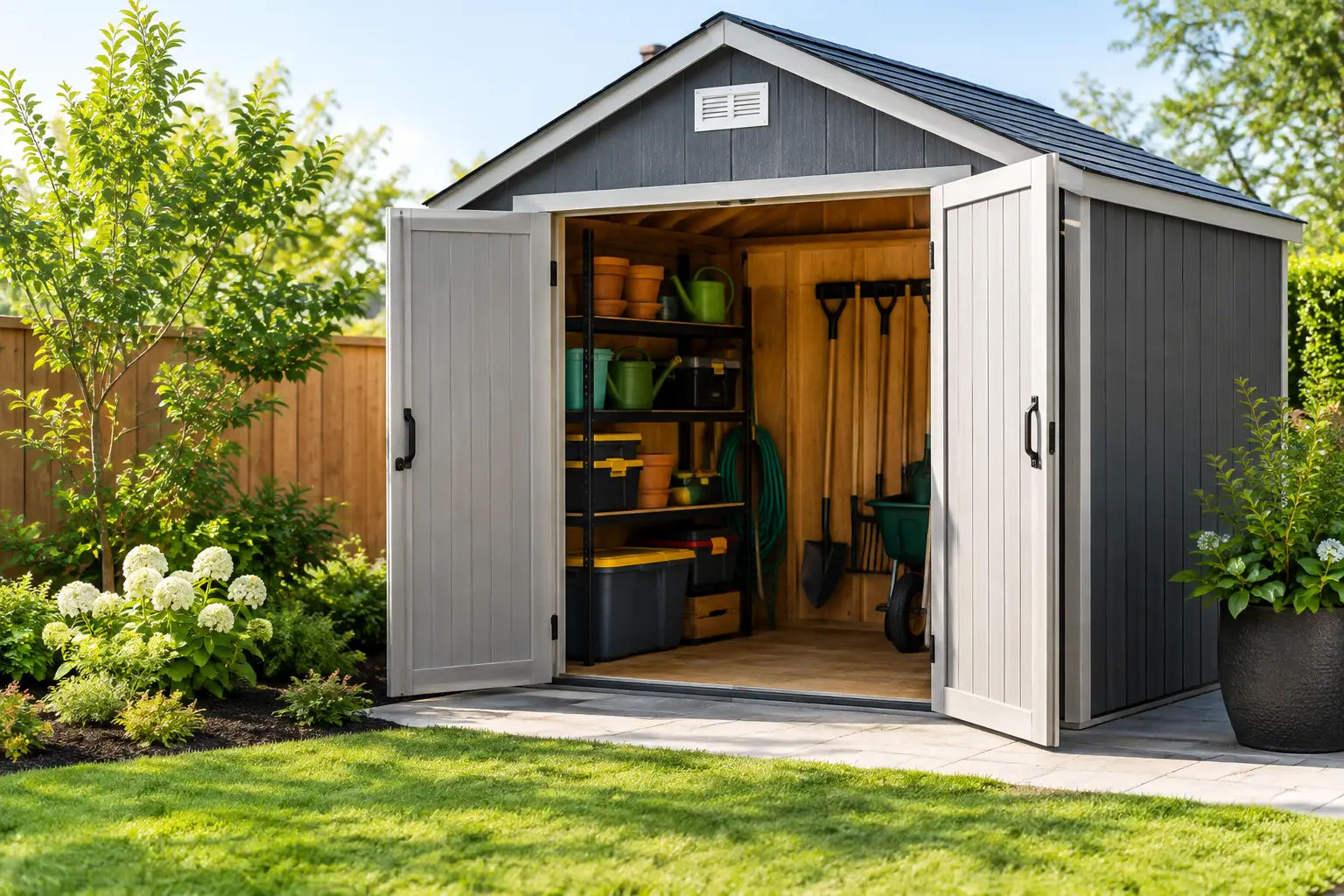
A shed that is too small becomes frustrating within a season. The lawnmower will not fit without moving three other things, damp cardboard boxes gather in the corner, and every trip for a spade turns into a rearranging job. The best garden sheds do more than hide clutter: they protect the equipment you have paid for and make the garden easier to use.
For most households, choosing well comes down to four practical questions: what needs to go inside, how much room can the garden spare, what weather will the shed face, and how much upkeep suits you? Answer those before comparing colours or special offers, and the right option becomes much clearer.
Start with what the shed needs to store
It is tempting to buy according to the space available, rather than the space required. Start instead by measuring the largest items you want to store. A lawnmower, bicycles, wheelbarrow, barbecue, garden furniture cushions and long-handled tools all need different kinds of room.
Think about access as well as floor area. A narrow shed may technically hold a mower, but it is not much use if it must be pulled out sideways over stored pots and tools. Leave a clear route from the door to the items used most often. Shelving can lift smaller equipment off the floor, while tool hooks make much better use of a tall wall.
A compact garden may suit a narrow storage unit for tools and cushions. For a family garden with bikes, a mower and seasonal furniture, a mid-sized shed usually offers better value than trying to make a small model work too hard. If you are between sizes, the larger option is often the wiser buy. Storage tends to fill itself surprisingly quickly.
Check external and internal measurements
Product dimensions commonly refer to the outside footprint. Internal measurements are smaller once wall panels and framing are taken into account, particularly with timber buildings. Door width also matters. Measure the widest item before ordering, and consider whether it needs to pass through at an angle.
Allow room around the shed for maintenance and airflow where possible. This is especially useful for timber buildings, where you may need access to treat external boards over time. Positioning a shed hard against a fence can make a future job unnecessarily awkward.
Choose a garden shed material for the job
There is no single best material for every garden. Each has strengths, and the sensible choice depends on the appearance you want, the maintenance you can manage and the type of storage inside.
Timber sheds offer a traditional finish
Timber garden sheds can look at home in established gardens and are a good choice when appearance matters as much as storage. Quality timber construction can provide a solid, versatile building with useful headroom and plenty of scope for shelves, hooks and workbenches.
The trade-off is care. Timber needs a sound base, ventilation and periodic treatment to maintain its weather resistance and appearance. It is also worth keeping vegetation away from the walls, as wet leaves and overgrown shrubs hold moisture against the building. For people happy to carry out a little seasonal maintenance, timber remains a popular and attractive choice.
Metal sheds suit secure, low-maintenance storage
Steel sheds are often selected for their value, durability and neat, modern appearance. They are well suited to storing tools, bikes and general garden equipment, particularly where low maintenance is a priority. A lockable door and a good anchoring system add useful reassurance for valuable contents.
Metal can develop condensation if air cannot circulate, so ventilation and a properly prepared base are essential. Avoid storing damp items inside for long periods, and consider shelves or hooks to keep equipment raised off the floor. A floor kit can be a practical addition where it is available, but it still needs a firm, level foundation beneath it.
Plastic and vinyl sheds keep upkeep simple
Plastic and vinyl garden sheds are a practical fit for busy households that want storage without regular painting or timber treatment. They do not rot and are generally easy to clean, while their panels can suit smaller gardens and straightforward storage needs.
Their lighter construction means the base and anchoring should never be an afterthought, especially in exposed locations. Look for ventilation, reinforced doors and enough wall strength for the shelving you plan to use. If the shed will hold heavier equipment or see frequent use, check the manufacturer’s loading guidance before fitting accessories.
The base is not an optional extra
Many shed problems begin below the walls. A base that is uneven, too small or poorly drained can lead to doors that will not close properly, water pooling at the threshold and unnecessary strain on the structure.
A concrete slab is a dependable long-term option for many garden buildings. Paving slabs on a properly compacted, level sub-base can also work well. Whichever route you choose, the finished base should be flat, square and sized to support the whole shed floor. It should not slope into the building.
Do not build directly onto grass, bare soil or loose gravel. Ground moisture can travel upwards, the building may settle unevenly, and a lawn base makes it difficult to keep the interior dry. In Ireland’s wet conditions, a little preparation here pays for itself over many years.
Plan drainage before delivery day
Choose a position that does not collect runoff from a roof, patio or higher ground. If water regularly gathers in one area of the garden, improve drainage or select another spot. Raising the building slightly on an appropriate base can help protect the floor, but it does not replace proper drainage.
Also check the route from the front of the property to the planned location. Large panels and packaged sections need a clear path through side gates, around corners and past low branches. This simple check can prevent a difficult delivery day.
Make security and everyday access work together
A shed storing expensive tools, bicycles or garden machinery deserves more than a basic latch. A suitable hasp and padlock, strong hinges and a building securely fixed to its base can make a meaningful difference. Keep keys out of sight and avoid advertising valuable contents through uncovered windows.
Security should not make the shed inconvenient. Double doors are useful for ride-on equipment, large mowers and furniture. A single door can be perfectly adequate for hand tools and smaller storage, while a ramp helps wheeled equipment cross the threshold without lifting.
Inside, organise by frequency of use. Put everyday tools near the entrance, long items along one wall and less-used seasonal equipment at the back or on higher shelves. This reduces clutter and stops sharp tools being left on the floor where they can cause damage or injury.
Think beyond storage before you buy
Some garden sheds start as a home for tools and gradually become a potting area, hobby space or compact workshop. If that sounds likely, allow for extra headroom, natural light and a layout that leaves room to stand and work comfortably. A window may be useful, but it should suit the shed’s placement and the privacy of neighbouring properties.
For a purely practical storage building, fewer windows can improve privacy and leave more wall space for shelving. For bikes and larger garden equipment, wide access may matter more than windows or decorative details. Buying for the job you genuinely need is usually better value than paying for features that will not be used.
It is also sensible to check local planning requirements and any estate or management rules before choosing a large garden building. Requirements can vary according to size, height, position and intended use. A quick check early on is easier than changing plans after the base is built.
Get the details right before ordering
Before placing an order, confirm the shed’s footprint, roof height, door opening, base requirements and the accessories included. Check whether you need anchoring, shelving, guttering, a floor solution or a padlock separately. These details affect the finished cost and how useful the building will be from day one.
At Coola Living, practical product advice can help narrow the choice when you are comparing materials, dimensions and storage needs. A little guidance is particularly useful for first-time buyers deciding between a compact unit and a full-sized garden building.
Choose a shed that gives your equipment a dry, secure home and gives you enough breathing room to use it properly. When the doors open easily, the floor stays clear and the mower comes out without a struggle, you will feel the benefit every time you step into the garden.
Discover more from Coola Living Ireland
Subscribe to get the latest posts sent to your email.