
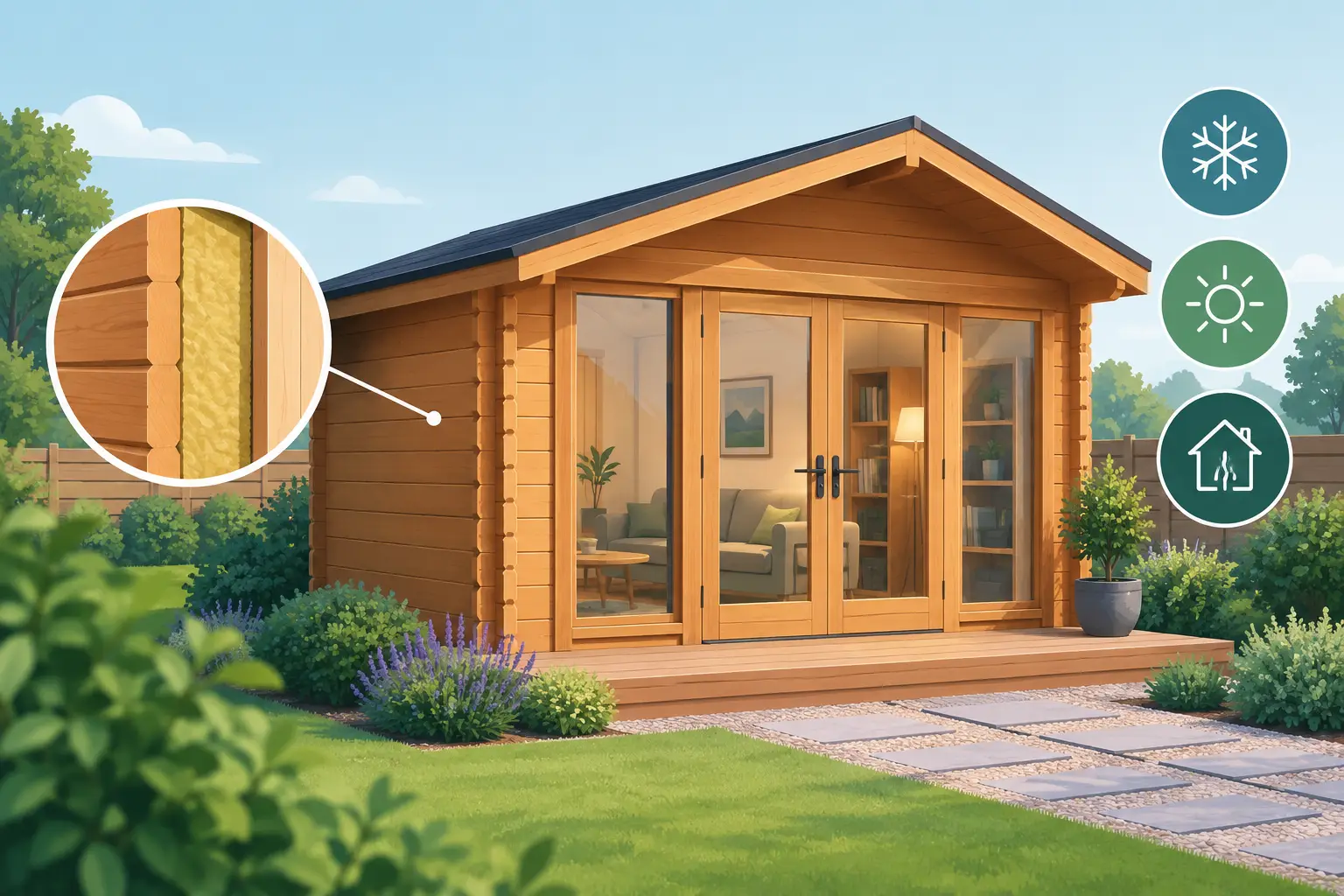
A garden building can look the part in July and still be too cold, damp or costly to heat by November. That is why an insulated garden log cabin is worth considering if you want more than occasional fair-weather use. For a home office, hobby room, gym, studio or family snug, insulation turns a timber building into a space you can genuinely enjoy across the seasons.
The right specification depends on how you plan to use it. A cabin for storing cushions and garden tools needs a very different build from one where you will spend several hours working each day. Getting that distinction right before ordering helps you spend sensibly and avoid expensive upgrades later.
What makes a garden log cabin insulated?
An insulated cabin is not simply a log cabin with a heater plugged in. It is a building designed to slow heat loss through the roof, floor, walls, doors and windows. The goal is to keep the room more comfortable with less energy, while also reducing the risk of condensation on cold days.
The roof is usually the first priority. Warm air rises, so an uninsulated roof can make even a thick-walled timber cabin difficult to keep warm. Quality roof insulation, fitted with appropriate lining and weatherproof roof covering, makes a noticeable difference in day-to-day comfort.
Floor insulation matters just as much, particularly where a cabin sits on a concrete base. Concrete is strong and reliable, but it can feel cold underfoot and draw warmth from the room. An insulated floor system, combined with a proper damp barrier beneath the building, helps create a warmer and drier space.
Wall construction needs a more considered view. Thicker interlocking logs provide better natural insulation than thin boards, but timber alone may not be enough for regular winter use. A lined internal wall with insulation in the cavity can improve performance significantly. It does, however, reduce the internal floor area slightly, which is worth allowing for when choosing a cabin size.
When an insulated garden log cabin is the right choice
If the building will be used only for occasional summer meals, children’s play or dry storage, paying for a fully insulated specification may not be necessary. A well-built standard cabin with good ventilation can be the better-value choice.
Insulation becomes far more worthwhile when the cabin is intended as a regular living or working space. It is especially useful for people working from home who need a quiet room away from the house, families wanting a den that remains pleasant after school, or gardeners and makers who want a dry place for projects throughout the year.
It also helps where electronics, instruments, books, artwork or fitness equipment will be stored inside. Rapid swings in temperature and moisture are not kind to these items. Insulation will not replace sensible ventilation or heating, but it creates a more stable environment.
For many homeowners, the biggest benefit is flexibility. A cabin that is comfortable in January is not limited to one job. It can begin as a home office, become a teen hangout, then serve as a hobby room or quiet retreat as household needs change.
Start with the base, not the décor
A handsome cabin cannot compensate for a poor base. Before looking at paint colours, furniture or lighting, make sure the site is level, firm and properly prepared. A concrete slab, paving base or engineered ground-screw system can all work, provided it is suitable for the building size and load.
The base should be level across the full footprint and offer reliable support beneath the cabin. It also needs to keep the structure clear of standing water. Timber lasts far better when rainwater can drain away rather than collecting beneath the floor.
Check access as well. Cabin panels, long roof boards and glazing need a practical route from the delivery point to the garden. Tight side passages, steps, overhead cables and sharp corners can affect both delivery and installation. It is much easier to address these details before the cabin arrives.
Insulation works best as a complete system
A common mistake is insulating one part of the cabin while overlooking weak points elsewhere. For example, a thick insulated floor is useful, but its value is reduced if cold air is entering around poorly fitted doors or single-glazed windows.
For a cabin intended for year-round use, think about the whole envelope. Roof and floor insulation should be matched with insulated or thicker walls, decent-quality glazing, draught sealing and practical ventilation. Opening windows are useful in warmer weather and help manage moisture when the building is occupied.
Doors deserve particular attention. Wide double doors bring in plenty of light and make furniture easy to move, but they need to close squarely and seal well. If security is a concern, look for strong frames, quality locks and hinges that are not easily accessible from outside.
Heating should be chosen only after the building fabric is sorted. An electric panel heater or small electric radiator can be enough for an efficiently insulated cabin of the right size. A poorly insulated building, by comparison, may need continual heating and still feel chilly near the floor or windows.
Choosing the right size and layout
It is tempting to choose the smallest cabin that fits the intended use. In practice, a little additional space often makes the building much more useful. A desk, chair, heater, shelving and a visitor can quickly fill a compact room.
For an office, allow room to move your chair comfortably, position a desk away from glare and add storage without blocking the door. For a gym, consider the ceiling height as well as the floor area. Treadmills, rowing machines and overhead exercises need proper clearance. For hobbies, plan for worktops, shelves and a clear route through the room.
Window placement has a major effect on how the cabin feels. South- or west-facing glazing can provide welcome daylight, but may make the room too warm on bright afternoons. Shading, blinds and opening windows can help. If privacy matters, position doors and windows with neighbouring gardens in mind from the start.
Do not forget electrical requirements. A garden office may need sockets for monitors, charging, heating and lighting, while a workshop may require a higher-capacity supply. Electrical work should be planned and completed by a qualified professional, rather than treated as an afterthought once the cabin is furnished.
Timber care in the Irish climate
Log cabins are durable garden buildings, but timber needs routine care to stay that way. Exterior treatment protects against rain, sunlight and changing temperatures, while regular checks let you deal with small issues before they become larger ones.
Follow the treatment guidance for the specific timber and finish. Some cabins are supplied untreated and need protection soon after installation; others may have a factory-applied treatment but still require maintenance at intervals. Keep vegetation cut back from the walls, clear leaves from roof drainage areas and make sure air can circulate around the building.
Timber naturally expands and contracts as humidity changes. This is normal, particularly during the first seasons after installation. Doors and windows may need occasional adjustment, and fixings should be checked as part of general maintenance. A cabin that is kept dry, ventilated and properly treated will remain a valuable part of the garden for years.
Planning and practical checks before you buy
Garden buildings can be subject to planning rules, depending on their height, location, size, intended use and distance from boundaries. Rules can also differ if the cabin will be used for sleeping accommodation, a business with visiting clients, or anything beyond incidental domestic use.
It is sensible to check the relevant local planning requirements before ordering, particularly for a larger cabin or one close to a boundary. Also consider drainage, neighbours’ outlook, access for installation and whether the location gives you the privacy you want.
At Coola Living, practical questions about dimensions, bases, access and intended use are exactly the questions worth asking before you commit. The best cabin is not always the biggest or most expensive one – it is the one that suits your garden, your budget and the way you will actually use it.
A well-planned insulated cabin gives you more than another building at the end of the garden. Set it on a sound base, specify the insulation for real use rather than wishful thinking, and you can create a warm extra room that earns its place every month of the year.
Discover more from Coola Living Ireland
Subscribe to get the latest posts sent to your email.