
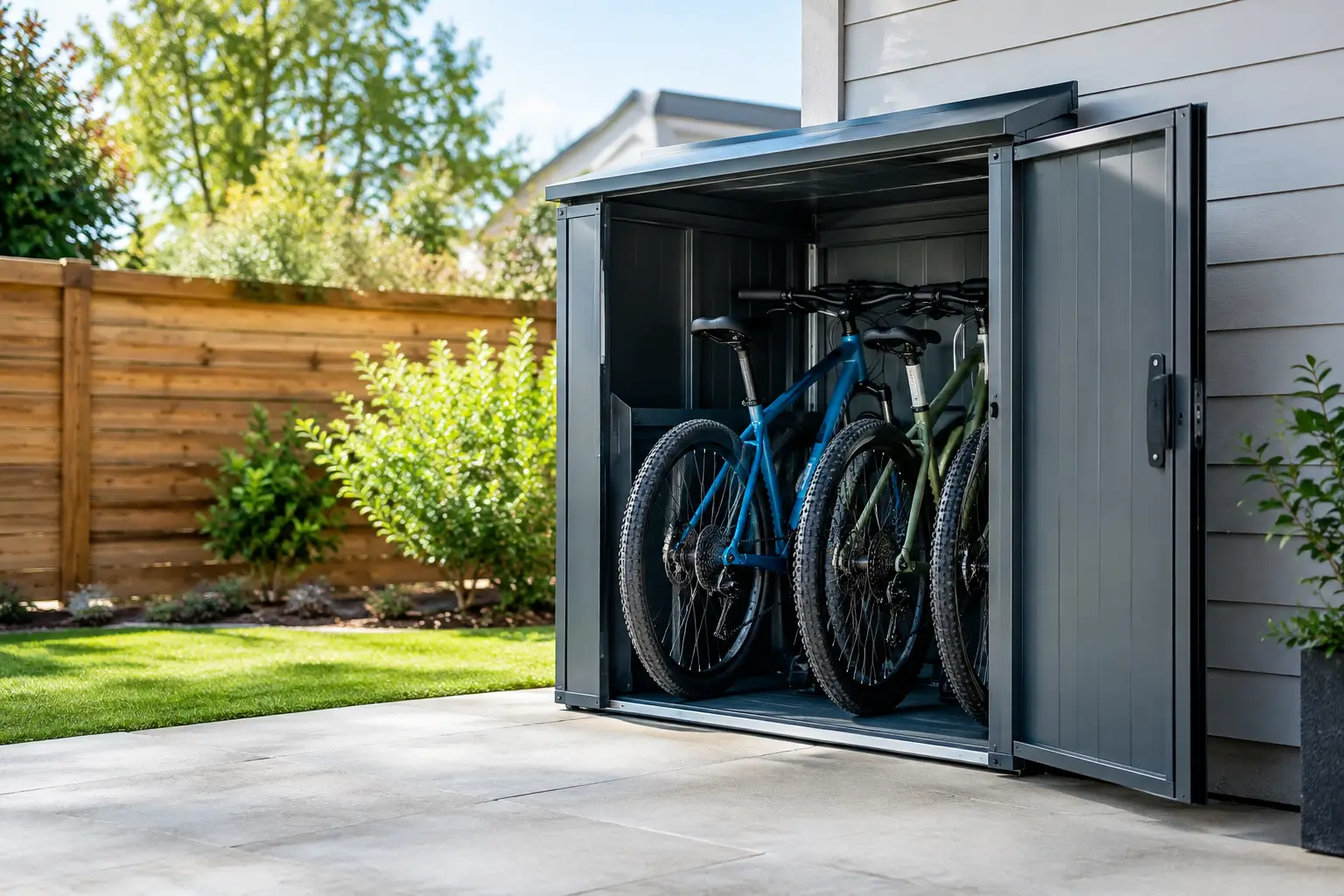
A bike left under a cover beside the house may be out of sight, but it is rarely properly protected. Covers can trap moisture, a light chain is easily targeted, and a bike leaning against a wall soon becomes an obstacle when the garden needs attention. Secure outdoor bike storage gives your bikes a proper home while keeping the driveway, side passage or patio clearer.
For many households, the best answer is not simply buying the biggest shed available. It is choosing storage that suits the number and type of bikes, the room you have, how often you ride, and the level of security your location requires. A family with four everyday bikes has different needs from a commuter protecting an electric bike, or a keen cyclist storing two road bikes with delicate components.
Start with the bikes you actually need to store
Before measuring a space, count the bikes that will genuinely live outdoors. Include children’s bikes, trailers, helmets and pumps if they tend to gather in the same place. It is easy to plan for two adult bikes, then find the doors will not close once muddy wellies and a lawn mower have claimed the remaining floor space.
Measure the longest and widest bike, including handlebars. Electric bikes, mountain bikes and bikes with baskets can take up considerably more room than expected. Allow space to roll each bike in and out without having to lift it over another one. This matters on wet mornings, when a storage solution should make cycling easier rather than turn it into a struggle.
Think about access as well as capacity. A narrow storage unit can be an excellent use of a side passage if one bike comes out at a time. If several family members leave at similar times, wider double-door access is usually worth the extra footprint. For occasional-use bikes, vertical hooks or wall-mounted racks inside a shed can free up floor space, provided the wall structure and fittings are suitable for the load.
Choosing secure outdoor bike storage by location
The right type of secure outdoor bike storage depends heavily on where it will sit. A visible front drive may call for a compact, lockable bike locker that looks tidy and allows quick access. A sheltered rear garden can accommodate a larger garden shed, giving room for bikes and seasonal equipment. A side passage often suits a slimline store, but check that the doors can open fully and that there is enough turning room at the entrance.
A purpose-built bike locker is often the most straightforward choice when bicycles are the main priority. These units are designed around bike dimensions and usually provide low-level access, making them practical for daily use. Look for solid panels, a secure door arrangement and fixing points that let you lock frames to the structure inside.
A garden shed offers more flexibility. It can store bikes alongside gardening tools, outdoor furniture cushions and household equipment, but only if it is planned properly. A shed that is too small quickly becomes difficult to use, while one with a weak door or basic latch may not offer the protection valuable bikes deserve. Steel sheds can be a sensible option where low maintenance and security are priorities. Timber sheds bring a warmer garden appearance and can be very durable when properly maintained. Plastic and vinyl storage can be convenient and weather-resistant, though security features vary greatly between models.
The material alone does not determine security. A well-sited, properly anchored unit with a good lock and internal ground anchor is far more reassuring than a heavier building left unsecured on loose paving.
Security starts from the ground up
A secure store needs a stable, level base. Concrete is often the strongest option for anchoring, but a correctly prepared paved base can work well too. The important point is that the building is fixed to a solid foundation rather than simply resting on it. This helps prevent movement in high winds and makes it much harder for an intruder to lift or shift the unit.
If you are installing on paving slabs, make sure they are level, well supported and large enough for the full footprint. Thin or uneven slabs can crack under concentrated weight, particularly with heavier bikes and storage units. Grass, bare soil and loose gravel are poor long-term bases because they settle, hold moisture and make secure anchoring difficult.
Inside the store, fit a purpose-made ground anchor or secure locking point to the concrete or other suitable solid base. Lock each bike frame to it with a quality chain or D-lock. Locking only a wheel leaves an obvious weakness, especially where quick-release wheels are fitted. If space allows, avoid having bikes tightly packed together, as frames and gears can be damaged when one is pulled free.
A good setup normally has several layers rather than relying on one expensive lock:
- A lockable, anchored storage unit that is not easy to remove or force open.
- A fixed internal anchor attached to a solid base or structural wall.
- A high-quality lock securing the bike frame, not just a wheel.
- Exterior lighting or a visible location that discourages someone from working unnoticed.
No storage arrangement can promise that theft will never happen. The aim is to make your bikes inconvenient, time-consuming and noisy to target, while keeping them protected from everyday weather.
Do not overlook doors, locks and hinges
Doors are usually the most vulnerable part of outdoor storage. Check how they close, where the lock sits and whether hinges are exposed. Double doors are useful for rolling bikes in, but they should meet cleanly and close without gaps caused by an uneven base. A strong hasp and padlock can improve security on some sheds, although the surrounding door construction must also be capable of resisting force.
Choose a weather-resistant lock that is suitable for outdoor use. A lock that corrodes after one winter is not much use, and Ireland’s damp conditions quickly expose weak hardware. Keep keys somewhere convenient but not obvious, and make sure everyone who uses the bikes knows how to lock the store correctly. Security is often undermined by a door left on the latch during a rushed school run.
For higher-value bikes, particularly electric models, consider a store with minimal glazing or position it so that the contents are not easily visible. A discreet unit can be useful, but avoid creating a hidden corner where someone could work unseen. Motion-sensor lighting and a clear line of sight from the house can provide a helpful balance.
Keep rain, condensation and dirt under control
Security matters, but dry storage protects the bike you have worked to secure. Rainwater, trapped condensation and poor ventilation can lead to rusty chains, corroded bolts and mouldy saddles. A bike store should keep direct rain out while allowing moisture to escape.
Make sure the roof is properly fitted, the base is level and water drains away from the building. Leave a small gap between stored bikes and the walls where possible. After a particularly wet ride, wiping down the chain and frame before storage will save a surprising amount of maintenance later. Mudguards help, but they do not stop road spray and grit building up around drivetrains.
Ventilation is particularly useful in a fully enclosed shed. Do not pack wet bikes in immediately beside fabric covers, cardboard boxes or damp garden equipment. If you store helmets and clothing there too, use hooks or shelving so items can dry rather than sitting on the floor.
Make daily use easy enough to stick with
The best storage is the one your household will use every time. If a bike has to be manoeuvred through a narrow doorway, lifted over a threshold and unlocked from three separate chains, it may end up against the nearest wall instead. Aim for a sensible balance between high security and a routine that works at 7am.
Set the store up around frequency of use. Put daily bikes nearest the door, with less-used bikes at the back or on wall hooks. Keep a pump, basic tools and chain lubricant close by, but do not leave valuables loose inside. A simple shelf for lights, gloves and helmets can also prevent the familiar search for missing cycling gear.
Check the store after the first few weeks of use. You may find that a hook needs moving, a door needs adjustment or a larger anchor is needed to accommodate wider frames. Small changes at this stage make the storage safer and easier to live with.
When comparing bike lockers and garden sheds, focus on the usable internal space, door opening, base requirements, lock arrangement and anchoring options rather than headline dimensions alone. Coola Living can help match a practical outdoor storage solution to your garden space, bike collection and budget, so your bikes are ready to ride rather than taking over the house.
Discover more from Coola Living Ireland
Subscribe to get the latest posts sent to your email.