
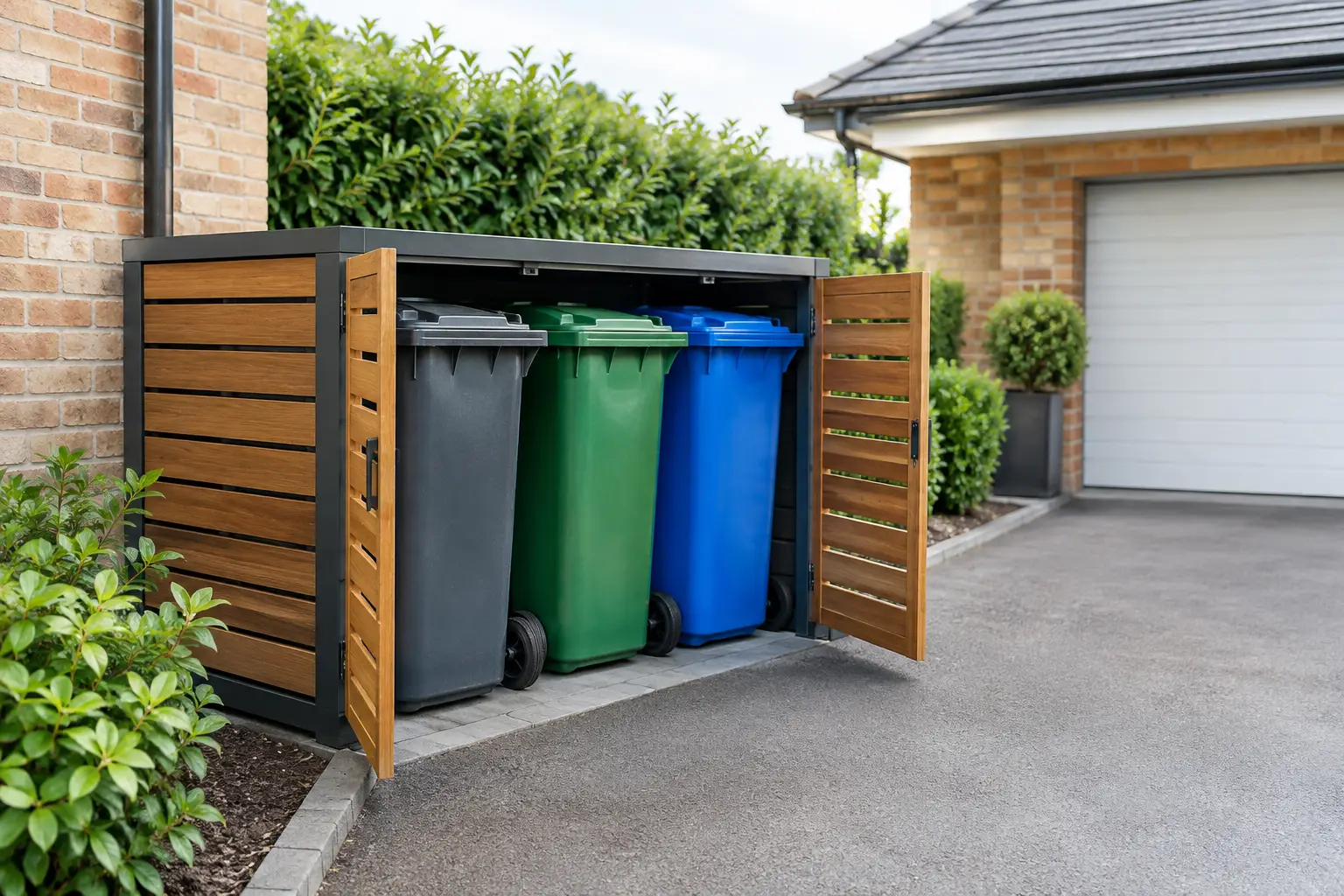
A pair of bins left beside the front door can make even a well-kept home look unfinished. The best wheelie bin storage ideas do more than hide plastic containers: they keep the driveway easier to use, reduce windblown lids and make collection day less of a chore.
For most homes, the right answer comes down to three things: how many bins you have, where the collection crew needs to reach them and how exposed the area is to rain and wind. A compact screen may be enough for a sheltered side passage, while a family home with three or four bins often benefits from a proper lockable store.
Start with the bins, not the space around them
Measure each bin before choosing a store. Wheelie bins vary in height, width and depth, and recycling bins can be larger than general-waste bins. Allow a little clearance at either side so the bins can be rolled in without catching the walls, plus enough room in front to tip or pull them out comfortably.
Think about the lid as well. If the store has a lifting roof or individual front doors, it needs to open fully without hitting a wall, gate or parked car. A tight-looking installation can become irritating very quickly when bins have to be handled in bad weather.
It is also worth deciding whether bins will stay inside the store on collection day. Some designs have a lifting lid connected to the bin lid, so rubbish can be added without pulling the bin out. Others are designed mainly for concealment and require you to wheel bins to the kerb before collection. Neither is wrong, but convenience matters when choosing a larger unit.
Wheelie bin storage ideas that suit real driveways
1. A slatted timber screen for a softer garden look
A timber screen is one of the simplest ways to hide bins without making the entrance feel boxed in. Position it in an L-shape around two or three sides, leaving the front open for easy access. Horizontal or vertical slats let air move through the area while breaking up the view of the bins.
This approach works particularly well beside a fence, hedge or garden gate. Choose pressure-treated timber and keep it raised slightly from the ground where possible, as constant contact with wet paving will shorten its life. Timber looks warm and can be painted to match gates or fencing, but it will need occasional maintenance.
2. A steel bin store for a clean, long-lasting finish
A galvanised steel store gives a driveway a more structured appearance and is a strong choice for exposed locations. Many models include front-opening doors, lifting lids and lockable handles, which makes them practical for busy households as well as discreet.
Steel suits contemporary homes, paved front gardens and places where security is a concern. Look for a weather-resistant finish, proper ventilation and a roof that sheds water rather than allowing it to sit. The trade-off is that steel stores can feel more noticeable than timber unless their colour works with the property.
3. A plastic storage unit for low-maintenance practicality
Weather-resistant plastic bin stores are popular because they are easy to clean and do not need staining or painting. They can be a sensible option for side passages, rental properties or households that want a tidy result without adding another maintenance job to the list.
A good plastic unit should have a firm base, UV-resistant panels and doors that close securely. Lighter models need careful anchoring in windy gardens. They are not always as substantial-looking as steel or timber, but they can offer excellent day-to-day value where appearance is secondary to convenience.
4. A purpose-built enclosure that matches the fence
If the bins sit in a highly visible front garden, a made-to-measure enclosure can be worth considering. Build it from the same cladding, posts or paint colour as the boundary fence, and it becomes part of the landscape rather than an object dropped into it.
Keep the design simple: side panels, a front gate and a gently sloping roof are often all that is needed. Avoid enclosing bins so tightly that smells linger or water cannot drain away. Small gaps between boards and a clear gravel or paved base will make the space more pleasant to use.
5. A low screen combined with planting
Not every bin needs a full cabinet. A waist-high screen with hardy planting in front can distract the eye while keeping access open. Evergreen shrubs, ornamental grasses or tall planters work well, provided they do not block the route to the bins.
This is a good option where a solid store would make a small entrance feel cramped. It does rely on the bins themselves being reasonably tidy, and plants need watering and trimming. Keep thorny plants away from the access side, especially if children are likely to take out the rubbish.
6. Use a side-return bin bay
The narrow strip between a house and boundary wall is often the most useful place for bins. A gated bin bay in a side return keeps them out of sight from the road while leaving the main driveway clearer for cars, bikes and deliveries.
Check the path width before committing. You need enough room to manoeuvre a full bin without scraping walls or catching drainpipes. If the area is dark and damp, choose materials that will tolerate moisture and include a solid surface rather than placing bins directly on soil.
7. Add a lockable store near a public path
Where bins are close to a footpath, a lockable store can discourage unwanted rubbish being added and stop bins being moved around in high winds. It can also help keep children and pets away from cleaning products or broken items waiting for disposal.
A lock should be convenient enough for the household to use. Complicated mechanisms tend to be left open. Simple hasps, padlock points or integrated keyed handles are usually sufficient, but always make sure every adult in the home can access the bins easily.
8. Choose a bin store with a green roof
A green roof can make a storage enclosure feel less severe, especially when it sits beside a front garden. Sedum, low-growing alpines or tough trailing plants can soften the roofline and provide a little visual interest throughout the year.
This idea is best for a sturdy, purpose-built structure designed to carry the added weight of wet compost, plants and retained water. It is not a casual add-on for a lightweight plastic store. Make drainage a priority, and keep the roof shallow enough to maintain safely.
9. Create a shared store for bins and outdoor essentials
If space is tight, a larger outdoor store can combine wheelie bins with room for recycling bags, a small shovel, grit, garden gloves or pet supplies. This is particularly useful at the side of a house, where several small storage items can otherwise gather around the bins.
Separate the clean storage area from the bins with a partition or shelf. Items such as cushions, tools and children’s outdoor toys should not be stored where leaking bags or bin odours may affect them. A dedicated bin compartment keeps the arrangement far more usable.
10. Keep it simple with a paved bin standing area
Sometimes the most effective improvement is not a store at all. A level paved pad with a neat edging strip, positioned out of the main sightline, stops bins sinking into gravel or damaging grass. Add one modest screen panel if needed and the area will look intentional rather than temporary.
This solution makes sense for households that need very quick access on collection day or have oversized bins that do not fit standard storage units. It is also easier to wash down than a fully enclosed store.
Details that make bin storage easier to live with
Place the store on a firm, level base. Concrete, paving slabs or a suitably strong composite base are better than bare soil, which becomes uneven and muddy. A slight fall away from the house will help rainwater drain rather than gathering beneath the bins.
Ventilation is another overlooked detail. Bins are rarely pleasant after several warm days, particularly when food waste is involved. Slatted panels, louvres or modest gaps around the structure allow air to circulate without putting everything on display.
Do not make the store too deep simply to conceal the bins completely. You should be able to roll each one out without moving the others. For a household with multiple bins, individual bays or dividers can prevent the weekly shuffle of trying to locate the right bin at the back.
Finally, plan the collection-day route. A handsome store at the far end of the garden is not useful if bins must be dragged over steps, loose stones or a narrow gate. For Irish homes dealing with frequent rain, a direct paved route is a small feature that makes a noticeable difference all year round.
A bin store should make the front or side of your home calmer, not add another awkward job to the week. If you are unsure about sizes, materials or how a unit will sit on your driveway, Coola Living can help you choose storage that looks right and works properly from the first collection day.
Discover more from Coola Living Ireland
Subscribe to get the latest posts sent to your email.